
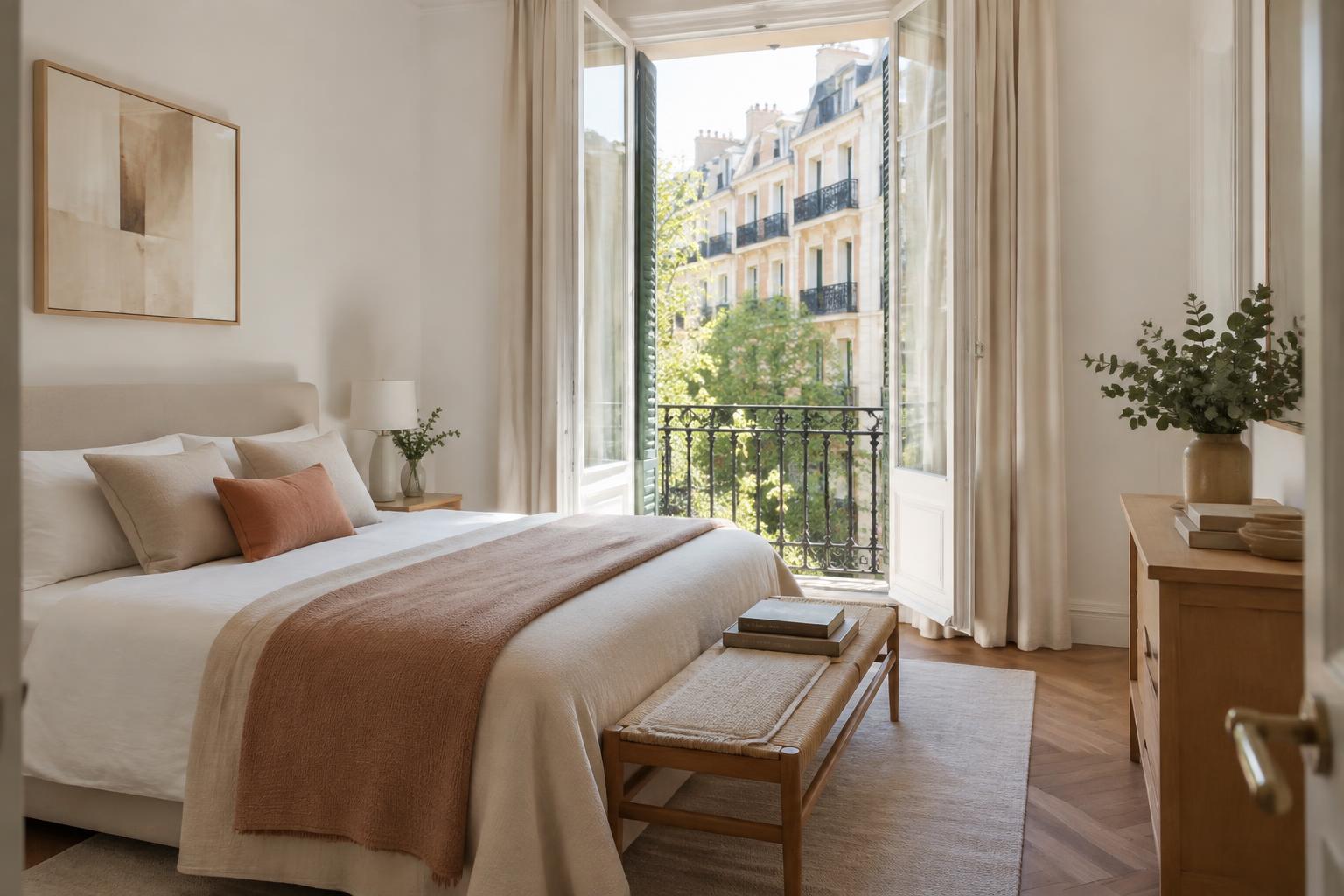
How to sell a flat in Recoletos
Practical guide to selling a flat in Recoletos, in Salamanca: defensible valuation, building dossier and comparables between nearby buildings.
Before putting the flat on the market: what you should prepare if your home is in Recoletos
Selling a flat in Recoletos requires more than posting an advert and waiting for calls. If your aim is to justify the price with solid arguments, it is worth preparing from the outset a clear valuation and a dossier that helps the buyer understand why your building may differ from other nearby ones. This is especially important in areas where very close buildings may not be equivalent because of orientation, condition, layout, floor level, lift, concierge, refurbishment, noise level or land registry configuration. Each of those points should only be stated if it applies to your building.
The key is not to “seem expensive”, but to be defensible. A well-informed buyer will usually compare several options and needs a clear explanation of why a particular home deserves a particular position in the market. If your flat in Recoletos Madrid has verifiable advantages, it is worth documenting them; if it has limitations, it is better to anticipate them honestly to reduce objections later on.
To get started well, you can request a free indicative estimate at valoración gratuita de su vivienda. It is not an official appraisal, but it can give you an initial range and a useful PDF report as a working basis, with an optional visit if you need it. If you prefer direct assistance from a property agency in Salamanca, the process is handled from the real office at Montesa 29, Monday to Friday from 10:00 to 15:00 and from 16:00 to 19:00, and you can also use contactar con UBICASA.
What a defensible flat valuation should include
A valuation useful for selling a home in Recoletos should not rely solely on square metres, but on explained comparables. The buyer is not buying a number; they are buying a specific property in a specific building, with certain conditions.
Practical steps:
1. Gather the basic documentation for the building and check its land registry description if you have it to hand.
2. Verify whether the home has features that affect the comparison: height, terrace, lift, concierge, storage room, interior/exterior aspect, refurbishment, condition of common areas or distinctive building features.
3. Prepare a short list of real comparable homes in the immediate area or very nearby, avoiding mixing properties that are not reasonably equivalent.
4. Explain in writing why a comparable is more or less similar to your flat.
5. Always separate what can be verified from what is subjective: “has undergone a full refurbishment” is verifiable; “is better” is not.
As a general guideline, the regional administration reminds owners that before a purchase and sale it is advisable to review the legal, financial and documentary situation of the home, and that the land registry certificate helps identify ownership and charges, while the energy certificate must be available for sale in the cases set out according to the information from the Community of Madrid. That documentary basis does not replace individual advice, but it does help you avoid initial mistakes.
How to use the Recoletos map without drawing too many conclusions
The municipal map of the Recoletos neighbourhood, in the Salamanca district, helps to place the property and its surroundings, but it should not be used to assume data that the map does not confirm. Labels may include boundary roads or surrounding areas, so it is advisable to cross-check the exact location of each building before comparing. The supplied plan includes full references such as **Calle de Serrano**, **Calle de Villanueva**, **Calle de Lagasca**, **Paseo de Recoletos**, **Biblioteca Nacional**, **Casa de América**, **Palacio de Linares** and **Jardines del Descubrimiento**. These references help with orientation, but they do not authorise you to say that every home is right next to them.
How to work with those references usefully:
1. Locate your building exactly in the land registry, land registry certificate or community plan, and do not assume that the map label matches your entrance.
2. Use those references only as a spatial framework for deciding which comparables to look for.
3. If your property is closer to a main road, study whether that affects light, noise or exposure; if not, do not suggest it.
4. Compare buildings that really share similar conditions, not just the same neighbourhood name.
Hypothetical example: if you are selling a flat with a classic layout in a well-kept building, it would not be wise to compare it with a refurbished flat in another building with a different floor plan or a much more favourable orientation. In the dossier for the buyer, the difference must be explained with facts: whether your building has well-maintained common areas, whether it has a lift, whether the home needs updating or whether it has a more closed layout. The right comparison reduces haggling and builds credibility.
Buyer dossier: what to show and in what order
In an area like Recoletos, the dossier matters almost as much as the valuation. It helps the buyer understand why you are asking for that price and why the home should not be mixed, without nuance, with others nearby.
Recommended order:
1. **Exact descriptive sheet**: surface area, layout, floor level, annexes, orientation if it can be evidenced and general condition.
2. **Clear floor plan or sketch**: so that circulation and use of space can be understood.
3. **Basic legal documentation**: land registry certificate, if applicable, and any relevant information on ownership or charges.
4. **Maintenance documentation**: refurbishments, upgraded installations, interventions on private or common elements, always with supporting evidence.
5. **Comparable argument**: two or three well-chosen examples, with an explanation of similarities and differences.
If you need to complete the preparation before bringing it to market, this complementary guide may help: /blog/reformar-piso-antes-vender. And to fit the strategy into the full sales process, you can review /blog/como-vender-piso-madrid-rapido.
How to choose comparables between nearby buildings
Not every nearby flat is a valid reference. In home sales in Recoletos, the comparison must be made with judgement and not by apparent proximity. A flat in an old building that has been refurbished, for example, is not valued the same as another in a building with more recent maintenance if the features are different.
Practical criteria for selecting comparables:
- Same or similar building type, if it can be evidenced.
- Similar floor level, especially if height changes light or noise.
- Comparable condition.
- Presence or absence of a lift, concierge or relevant common features.
- Level of refurbishment inside the home.
- Conditions of the façade, courtyards and layout.
Common mistakes:
- Choosing solely on the listed price, without knowing whether the home is actually closed, refurbished or on a better floor.
- Using references that are too far away just because they are in Salamanca.
- Mixing flats with and without refurbishment as if they were equivalent.
- Ignoring that a building may have more explainable value because of its documentary status or presentation, not because of a general impression.
If you want a broader comparison base, this guide may help you understand the process from the buyer’s point of view: /blog/negociar-precio-compra-vivienda. And if the flat comes from an inheritance, the documentary approach changes; in that case it is worth reviewing /blog/vender-piso-heredado-madrid.
What to show the buyer to justify differences between buildings
In Recoletos, two nearby buildings may look similar from the outside and be very different inside. Your job is to translate those differences into clear language. For example, if your building has better entrance hall upkeep or a more efficient layout, that should be shown with photos and an accurate description. If your building needs improvements, it is also worth saying so early so as not to break the negotiation later.
What works best is a dossier with three layers:
1. **Facts**: location, condition, surface area, common elements, annexes.
2. **Comparison**: why certain buildings are chosen and not others.
3. **Conclusion**: why the asking price is aligned with what the buyer is actually purchasing.
This avoids one of the most common confusions: comparing “flats” when in reality “buildings” are being compared. That difference can change the buyer’s perception even before they step inside.
How to close the sale with less friction and more order
Once the valuation has been defined and the dossier prepared, the next step is to organise the negotiation. There is no point improvising answers or adding documents late. The clearer everything is from the beginning, the less room there will be for last-minute adjustments.
Local checklist before publishing:
- Verify the exact location of the building on the map and in the documentation.
- Confirm which features of the home are truly comparable and which are not.
- Prepare honest, bright photos that are consistent with the actual condition.
- Have ready the argument for why the price is defensible.
- Review what foreseeable questions an informed buyer may ask.
- Arrange an optional visit if the online estimate needs an in-person check.
If you want a free indicative valuation for your flat in Recoletos, you can request it at valoración gratuita de su vivienda. And if you would like to work on the sale with professional support from a real office at Montesa 29, you can write to contactar con UBICASA or consult the district page /inmobiliaria-barrio-salamanca.
In short: selling a flat in Recoletos is not about “setting a high price” but about building a solid explanation, with well-chosen comparables and a dossier capable of supporting that explanation before the buyer. If you prepare the building well, clearly distinguish what adds value and what does not, and organise the documentation from the outset, the negotiation will be much clearer and more professional. General guidance can help you get started; the specific decision, however, always depends on your exact home and how it compares with the buildings truly nearby.