
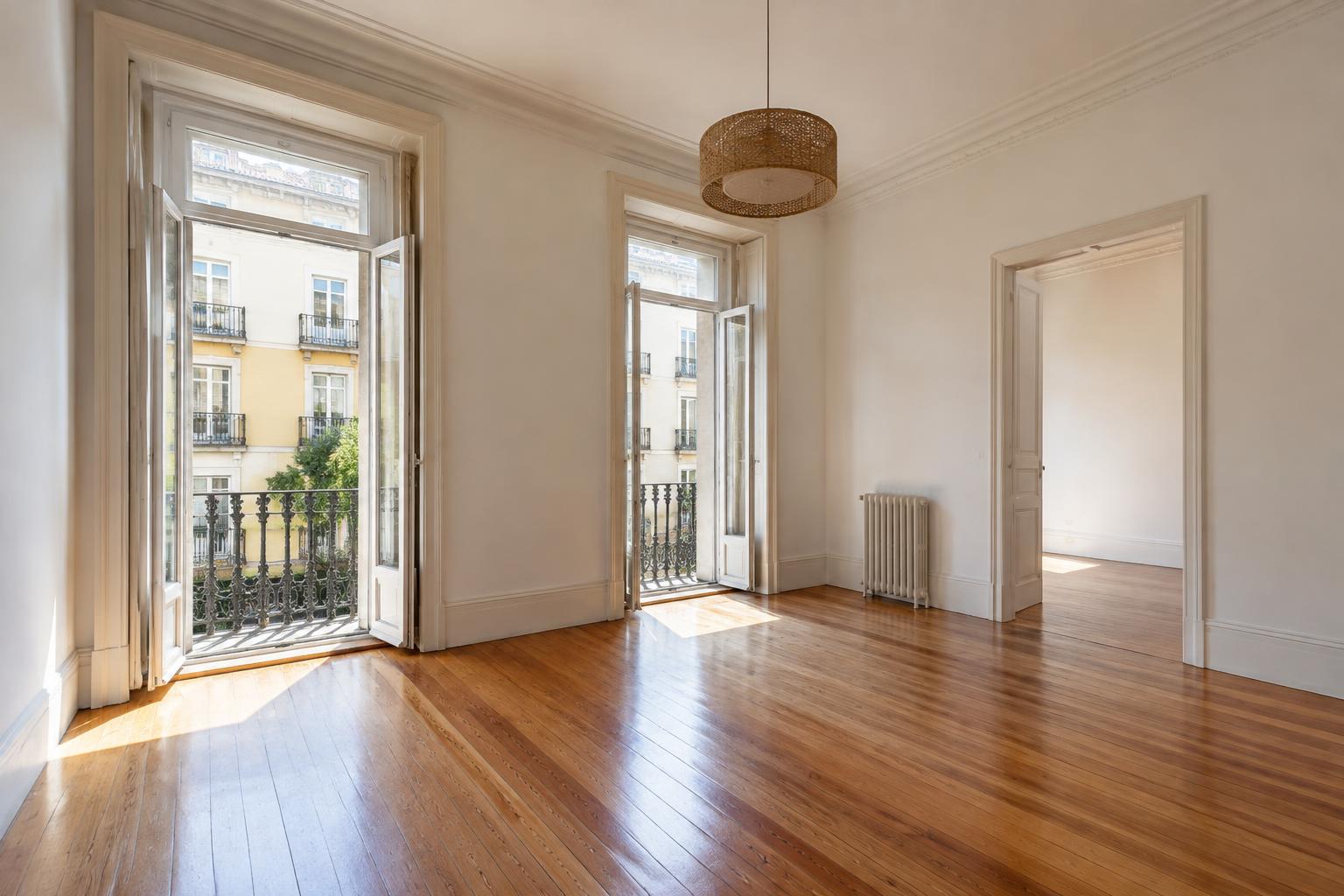
How to sell a flat in Sol
A practical guide to selling a flat in Sol, district Centro, without confusing the property’s real location with views, surroundings or distance to the heart of the neighbourhood.
Selling a flat in Sol: start by locating the property precisely
Selling a flat in Sol is not just about saying that the home is “in the centre” or “next to Puerta del Sol”. In such a recognisable neighbourhood, an imprecise advert can lead to unsuitable viewings, false expectations and poorly chosen comparables. If you want a smoother property sale in Sol, the first step is to describe the property accurately and separate what belongs to the property from what belongs to the surroundings.
In this part of district Centro, it is advisable to use references that help locate the property or its surroundings, not to attribute qualities to it that have not been verified. Visible reference points in the neighbourhood include **Puerta del Sol**, **Plaza Mayor**, **Gran Vía** and **Callao**; they are useful for orientating the location, but it should not be assumed that every home is close to all of them, or that the property’s street belongs entirely to the same area. The municipal map of Sol shows precisely that need for caution when defining the neighbourhood and its boundaries: Barrio 016 - Sol, district Centro.
### 1. Draft the advert from the property, not from the neighbourhood
A good advert for selling a flat in Sol should first answer a basic question: what exactly is being sold? Before talking about the neighbourhood, describe the home with verifiable details.
Practical steps:
1. Check the exact address of the property and the land registry or cadastral reference shown in your internal documentation.
2. Identify the physical details you can actually verify: floor level, orientation if known, number of bedrooms, general condition, whether it has a lift, balcony, terrace or patio, and whether these elements form part of the home or are communal.
3. Distinguish in the text between “home” and “surroundings”: do not mix an open view with a structural feature of the flat.
4. If your property overlooks a square, a landmark street or a heavily trafficked area, describe it as a condition of the property only if you can prove it and if that view genuinely corresponds to the specific home.
Common mistakes:
- Saying “in Puerta del Sol” when the property is elsewhere in the neighbourhood.
- Presenting a view as permanent when it depends on height, orientation or a patio that has not been verified.
- Confusing administrative proximity with actual walking distance.
### 2. Use local references to locate, not to exaggerate
In Sol, location is understood quickly, and that is precisely why it requires greater accuracy. If you sell a flat in Sol Madrid, the surrounding references help situate the property, but not to inflate the advert. For example, mentioning Puerta del Sol, Plaza Mayor, Gran Vía or Callao can be useful so the buyer understands the general area, provided it is done with a neutral phrase such as: “the property is located in the surroundings of…” or “the advert takes as a reference the area of…”.
Useful actions:
1. Select between two and four recognisable references that orientate, without promising exact proximity.
2. Check which of those references actually makes sense for your specific property.
3. Avoid a long list of urban icons that distract from the flat.
4. If the home is on an inner street or in a building with a separate access, prioritise that information over any eye-catching neighbourhood reference.
These references also help when choosing comparables. You should not compare your flat with another simply because both are “in Sol”; you must check whether they share surroundings, height, condition, building, access and aspect. A flat in Sol with very different characteristics may require a tighter selection of comparables than one in a less complex district.
### 3. Carry out a flat valuation in Sol without confusing surroundings and characteristics
A flat valuation in Sol should start from what can be verified. It is not enough to assume a home is worth more because it is in Centro, or less because it is on a pedestrian street, or more because it has “charm”. All of that may affect perception, but the sales presentation should be based on facts.
To structure your commercial valuation:
1. Separate property attributes from surroundings.
2. Analyse whether your property matches the typology of the flats you are comparing it with.
3. Check whether the interior condition, light, lift, renovation or upkeep justify real differences.
4. Do not copy comparables from a broad area of the district without checking that they are truly equivalent.
If you want an indicative market estimate, UBICASA can provide a free valuation. That estimate is indicative and does not replace an official valuation; it may include a PDF report and, if appropriate, an optional visit to refine the information.
### 4. Prepare the advert to filter genuinely interested viewings
A well-written advert saves time. In an area like Sol, where the buyer may be looking for a main residence, investment or mixed use, clarity is essential. It is not advisable to attract viewings with ambiguous phrases that later have to be corrected.
Practical advice:
- If the home has urban noise, state it clearly and in a balanced way if it is relevant.
- If your flat is in a building with a lift, specify whether access is direct or whether there are previous steps; only if you can prove it.
- If the layout is unusual because of age or an internal division, explain it plainly.
- If the community has rules or special levies, check in advance what must be communicated during the negotiation stage.
Mistake to avoid: presenting a flat as a “bright home with views” when its brightness depends on partial orientation or a narrow patio. In Sol, where every detail matters, an overly optimistic description can damage the buyer’s trust at the first viewing.
### 5. Check comparables and documentation before publishing
Before going to market, it is worth reviewing the documentation and commercial side at the same time. The Community of Madrid reminds owners that it is important to verify the legal status of the home by means of a **Nota Simple** and confirm that IBI and community charges are up to date; it also states that in a sale and purchase the property details, charges and financial obligations must be clear. In its guide on sale and purchase, it also indicates that the seller must have the energy performance certificate for the sale and that municipal capital gains tax and the gain in IRPF are part of the tax matters linked to the transfer (Compraventa de viviendas).
With that basis, carry out this practical check:
1. Check that the sales description matches the physical and registry reality.
2. See whether there are elements that should be clarified before the deposit.
3. Adjust the advert to the specific home and not to the neighbourhood’s reputation.
4. Prepare a brief response for repeated questions: orientation, condition, community, lift, views and type of building.
If you need to coordinate the process, UBICASA works from its real office at Montesa 29, in Salamanca, for all Madrid neighbourhoods, including property sales in Sol. You can use the district page inmobiliaria Centro to contextualise the area and, if you prefer to speak directly, go to contactar con UBICASA.
### 6. Hypothetical example of a correct advert and an incorrect advert
Hypothetical example of a correct advert:
> Flat in Sol, district Centro, located in a building in the surroundings of Puerta del Sol. The description is limited to the home: layout, condition, height, access and private elements. References to Plaza Mayor, Gran Vía or Callao are used only to orientate the general location, without claiming exact proximity or attributing to the flat unverified views or distances.
Hypothetical example of an incorrect advert:
> Flat with views over all of Madrid, two minutes from all the key points of Sol, next to the neighbourhood’s main connections and perfect for any buyer.
The difference is clear: the first text separates location and attributes; the second mixes expectations, distances and unverified promises.
### 7. Recommended order for selling a flat in Sol without losing precision
If you had to prioritise a sequence, it would be this order:
1. Confirm the exact location of the property.
2. Draft an objective property sheet.
3. Choose comparables that are truly comparable.
4. Review documentation and any charges.
5. Publish the advert with cautious local references.
6. Filter viewings with clear предвар-visit questions.
7. Adjust the message if you notice the buyer is misinterpreting views, surroundings or distances.
This method works especially well in highly recognisable neighbourhoods, because it prevents the fame of the surroundings from replacing the quality of the home. If you want professional support to sell a flat in Sol, you can request a free indicative estimate or contact UBICASA to review the sales approach for your property.
In short, the key in Sol is not to say a lot about the neighbourhood, but to say well what is being sold. When the advert rigorously distinguishes between property, surroundings and comparables, the sale gains credibility from the first contact.