
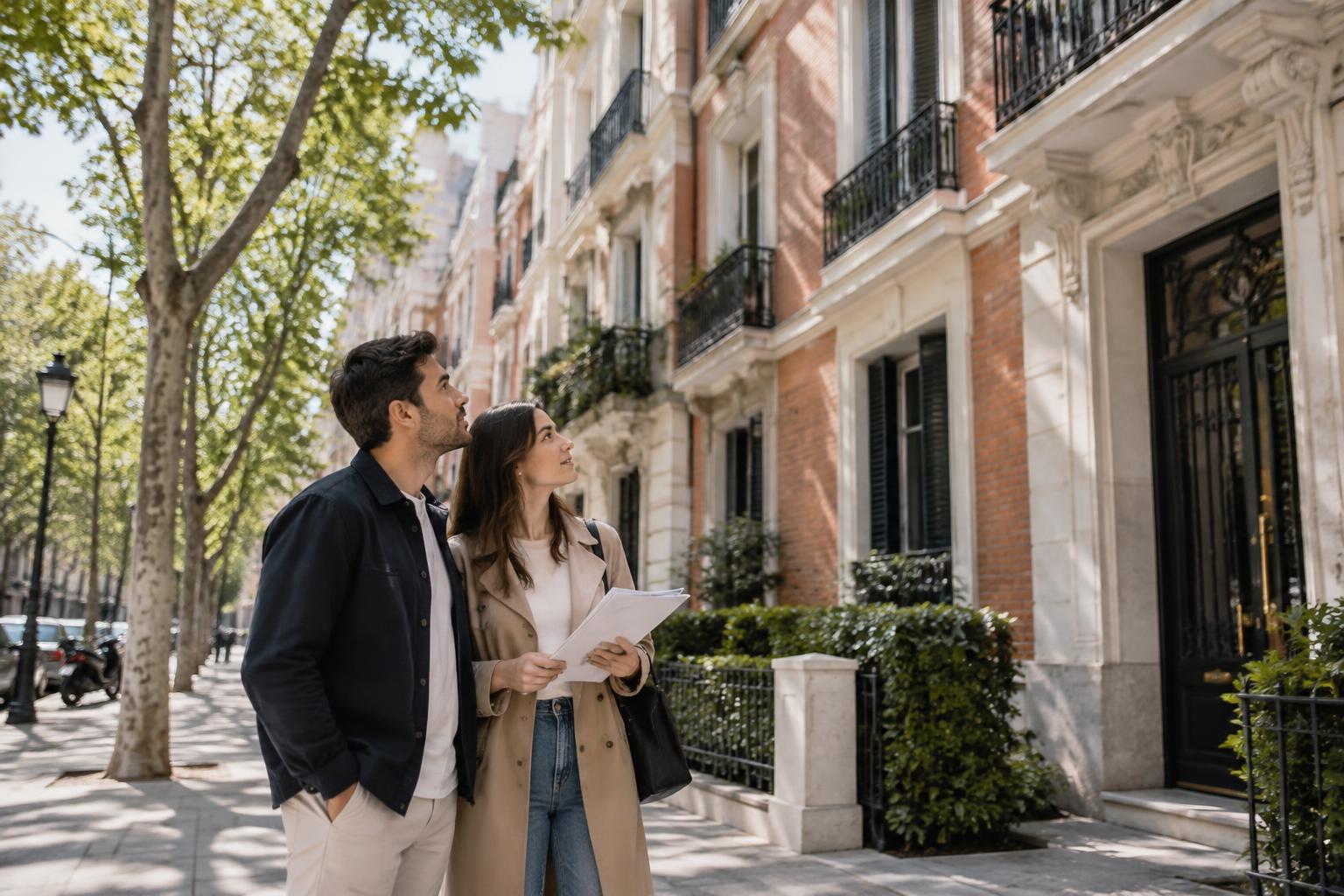
Living in Chamberí: areas, property types and what to check before buying
A practical guide for owners and buyers who want to understand Chamberí before making decisions: what types of homes predominate, what to check in each building, and how to assess whether it fits your project.
Why Chamberí often interests buyers and owners
Chamberí is one of the areas of Madrid that raises the most practical questions for those looking for a home to live in or invest in. Before deciding on a flat in this district, it is worth looking beyond the location and checking whether the building, the layout and the legal status fit what you need. Not all homes in the area follow the same logic: there are flats in older buildings, refurbished properties, interior-facing homes, exterior-facing homes, ground-floor flats with a patio and homes with annexed elements such as a storage room or garage space.
If your aim is to buy or sell, the first step should not be simply comparing listings, but identifying exactly what you are buying: usable and built area, annexes, condition, residents' association, special assessments and possible need for renovation. In property transactions, the Madrid authorities remind buyers that it is advisable to check the legal and financial situation of the home before completing the operation, including the residents' association and the property tax, because those debts can affect the buyer Compraventa de viviendas.
### 1. What types of home you will usually find in Chamberí
In practical terms, in Chamberí you may find three common profiles:
1. Homes in older buildings with a more compartmentalised layout.
2. Refurbished flats, where the condition of the property may be good but the buyer should check whether the renovation is properly documented.
3. Homes with accessory elements that should be confirmed in the title deed and simple note: storage room, terrace, patio or garage space.
Each profile requires a different review. An exterior-facing flat may offer more light, but it may also mean greater noise exposure. An interior-facing one may be quieter, but ventilation and height should be checked. A ground-floor flat may be of interest for accessibility, although privacy, damp and its relationship with the entrance hall should be checked.
What you should check before buying or viewing a home in Chamberí
Before making an offer or entering into a reservation contract, it is advisable to organise the review in this order:
1. **Basic documentation**: title deed, simple note, cadastral reference and energy certificate.
2. **Physical condition**: state of installations, windows, damp, orientation, ventilation and noise.
3. **Residents' association**: amount of fees, outstanding special assessments and rules that may affect use.
4. **Annexes and actual use**: whether the garage space, storage room or terrace are truly included in the transfer.
5. **Subsequent costs**: renovation, furniture, moving and possible electrical or air-conditioning upgrades.
In property transactions, the Community of Madrid also points out that the simple note provides information on encumbrances such as mortgages or seizures and on ownership of the property. This check does not replace a full analysis, but it does help to detect obvious issues before signing.
### 2. Common mistakes when choosing a flat in this area
There are several mistakes that are repeated when buying or valuing a home in Chamberí:
- Focusing only on the cosmetic renovation and not checking the installations.
- Assuming that an exterior-facing flat will always be better than an interior-facing one.
- Taking it for granted that an annex is included without checking the title and the Land Registry.
- Not asking for proof of community fees and property tax before proceeding.
- Signing a reservation without being clear about what happens if a relevant encumbrance or defect later appears.
It is also advisable not to confuse general guidance with individual advice. What is reasonable for one home may not be for another. For example, a buyer looking for a main residence will value light, quiet and layout; an owner who wants to sell will need to prioritise clear documentation, presentation and absence of uncertainty.
How to assess whether a home in Chamberí suits you
The right decision usually comes from combining use, budget and documentary security. If you are buying to live in, ask yourself whether the home will allow you to be comfortable in two or three years' time, not just on the day of signing. If you are buying to resell later, think about which elements make the property more liquid: functional layout, light, condition of the building and clean documentation.
Useful steps:
1. Compare two or three similar homes using consistent criteria.
2. Separate asking price from the real total cost.
3. Check whether the layout allows reasonable changes.
4. Request information on residents' association fees and utilities.
5. Assess the need for renovation with technical judgement, not just visual impressions.
If you would like an indicative market estimate for a home in Madrid, you can request one through our online valuation. The estimate is indicative, provides a price range and PDF report, and can be completed with an optional visit if you need it.
What you can do if you want to buy or sell in Chamberí
If you are thinking of selling, preparing the documentation before listing avoids delays and improves the property's presentation. If you are thinking of buying, the key is not to rush into a reservation if important data are still to be confirmed.
Practical actions we recommend:
1. Gather the title deed, simple note, property tax and residents' association receipts.
2. Check whether the home has annexes and whether they are stated in the title.
3. Review the condition and the cost of pending renovations.
4. Ask for an indicative valuation before setting a price or offer.
5. If you would like to review your case in detail, request contact on our contact page.
If you would like to see it in person, UBICASA is at Calle Montesa 29, Madrid, Monday to Friday from 10:00 to 15:00 and from 16:00 to 19:00.
If you would like to go further, read our related guide: Living in the barrio de Salamanca: areas and types of homes.