
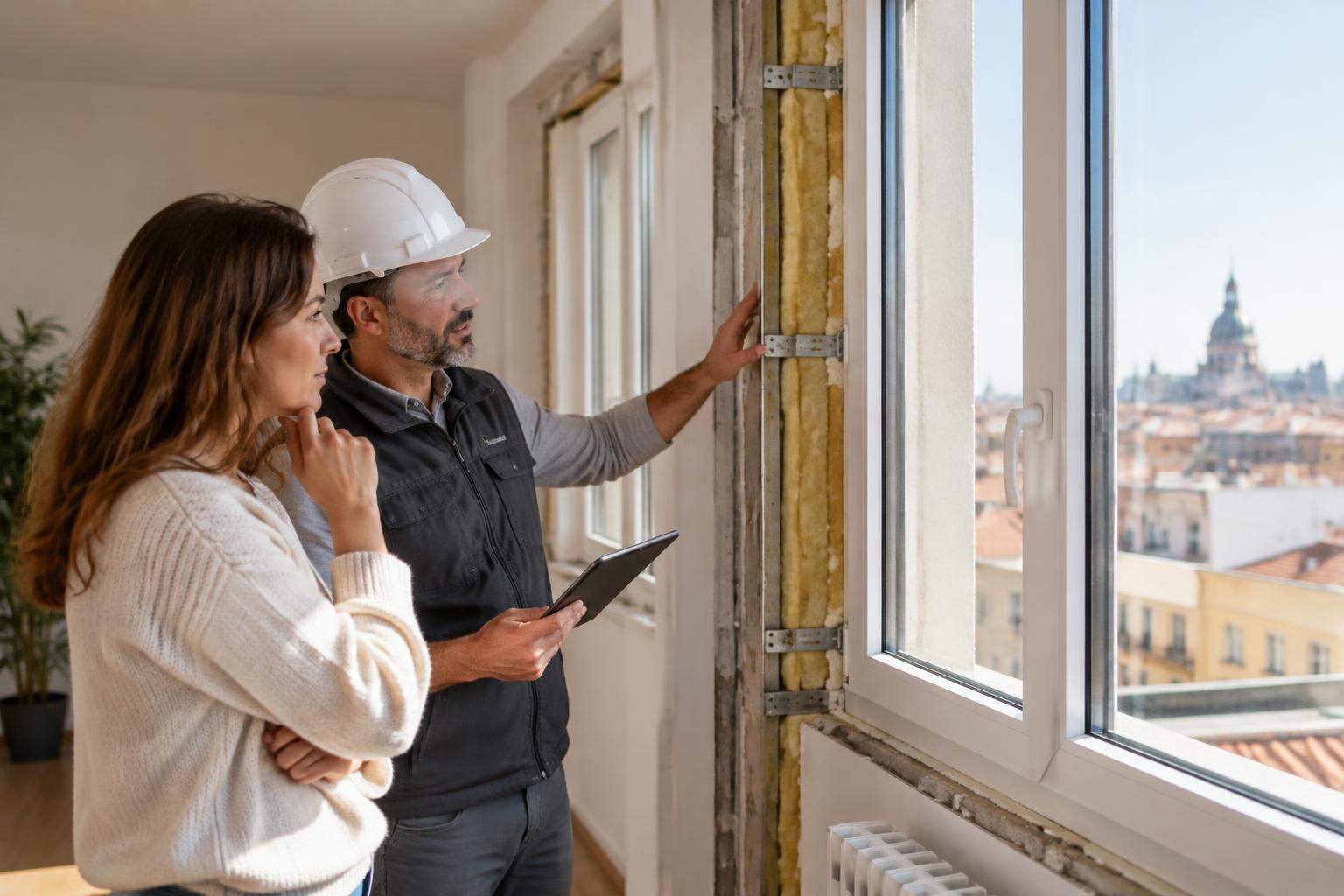
Thermal insulation for homes: how to prioritise improvements without promising savings
A practical guide for owners who want to improve the thermal insulation of their home with a sensible approach: where to start, how to assess windows and the building envelope, when to request a certified technical assessment, and which permissions it is wise to check before acting.
Where to start if you want to improve the thermal insulation of your home
When an owner thinks about improving thermal insulation, the first temptation is usually to start with the most “visible” intervention: replacing windows, adding internal cladding or refurbishing a specific room. However, the right order should not be based on intuition, but on a prior diagnosis that identifies where comfort is being lost most and where there is the greatest room for improvement. In technical terms, the thermal envelope is the set of external enclosures, internal partitions and thermal bridges of the building, or part of it, as set out in Real Decreto 390/2021.
The key idea is simple: before spending, it is worth understanding which element is most affecting the thermal performance of the property and whether the improvement will genuinely be viable in your case. Not every home needs to begin in the same place. In some, old windows are at the heart of the problem; in others, the weak point lies in the façade, the roof, the junctions with pillars or the shutter boxes.
Windows: when they make sense and when they should not stand alone
Windows often come top of the list because they are visible, used every day and have a major effect on the perception of comfort. But it is not always right to replace them first. If the property has significant losses through the façade or poorly resolved junctions, changing only the windows may improve part of the problem and leave the rest untouched.
Before deciding, it is worth checking:
1. **The condition of the glazing and frame**: whether there is condensation, air leakage or faulty closing mechanisms.
2. **Compatibility with the rest of the envelope**: a new window in a very poor façade may not deliver the expected result.
3. **Heritage or community protection**: in buildings with heritage value or a uniform appearance, there may be limits on altering joinery.
4. **The need for ventilation and humidity control**: improving airtightness without reviewing ventilation habits can lead to condensation problems.
Practical advice: if you are told to start with the windows without any explanation of what is happening with the façade, the roof and the thermal bridges, ask for a second technical opinion. Isolated improvement can be useful, but it should not be decided blindly.
Thermal envelope: what to review before prioritising a project
The energy performance certificate does not replace a full audit, but it does provide useful information because it must include a description of the building’s energy characteristics, including the thermal envelope, and recommendations for technically viable and individualised interventions. The certificate itself states that those recommendations may address “the recommended interventions for improving the envelope” and also “the most appropriate time sequence for carrying out the proposed measures” Real Decreto 390/2021, art. 8.
For an owner, this translates into a useful decision-making guide:
1. **Identify the main problem**: cold in winter, excessive heat in summer, draughts, condensation, cold walls or noise entering through window frames.
2. **Distinguish between symptoms and cause**: a less comfortable room does not necessarily mean the fault lies in that particular window.
3. **Review the sequence of action**: sometimes it is preferable to work on the envelope first and then on the joinery, or the other way round, if the technician justifies it.
4. **Ask for an individualised proposal**: a recommendation that is valid for one property does not automatically work for another, even if they are in the same building.
Common mistake: thinking that more insulation always means a better solution. If the intervention is poorly designed, it can shift the problem elsewhere or worsen indoor ventilation.
Certified technical diagnosis: why it matters before refurbishing
If you want to prioritise properly, the soundest step is to have a **competent technician** carry out a visit, take measurements and issue an assessment tailored to your property. Real Decreto 390/2021 establishes that, during the certification process, the competent technician must make at least one visit to the property for the necessary data collection, tests and checks, and that the certificate must include the date of the visit and a description of the checks carried out art. 6.
That does not turn the certificate into a valuation or a building project, but it does help you avoid inefficient decisions. In addition, the certificate must include recommendations for possible interventions to improve energy efficiency, with an indication of technically viable actions. In other words: the good assessment is not the one that promises the most, but the one that best explains what should be done first and why.
Recommended steps:
1. Request a technical visit before buying materials or signing off a project.
2. Give the technician as much information as possible: plans, previous refurbishments, damp issues, invoices or photos.
3. Ask them to explain which element is most responsible for the problem: windows, enclosures, roofs or thermal bridges.
4. Compare intervention scenarios, not just quotations.
Permissions, the community and exceptions: what to check before touching anything
Before carrying out insulation works, it is worth checking whether the action affects common elements, the building’s appearance or installations that require additional authorisation. In a community, replacing an internal window in a detached house is not the same as altering visible joinery on a shared façade. If the intervention affects the external envelope or shared elements, the community may have a say in the decision.
There are also relevant exceptions: the legal framework itself excludes certain officially protected buildings, temporary constructions, buildings with low energy demand and other specific cases from the scope of certification Real Decreto 390/2021, art. 3. That does not mean they cannot be improved, but it does mean the procedure and viability must be assessed case by case.
Practical advice before starting the work:
1. Check whether the window or façade forms part of common elements.
2. Verify whether there are bylaws, community agreements or aesthetic criteria that affect the project.
3. Ask in writing for the exact scope of the work and the technical reason for each measure.
4. Check whether the technician indicates the need for a licence, prior notice or another municipal procedure depending on the intervention.
If you would like an initial overview of your property’s condition, you can request a preliminary estimate at /valoracion-vivienda-madrid. And if you would prefer to discuss your case with a team in Madrid, you can do so at /contacto or at the real UBICASA office at Calle Montesa 29, Monday to Friday from 10:00 to 15:00 and from 16:00 to 19:00.
How to decide priorities without promising savings
The best way not to mislead yourself is not to promise a specific saving without data to support it. In thermal insulation, every home responds differently depending on orientation, ventilation, age, materials, state of repair and actual use. That is why the correct objective is not “save X”, but **improve thermal performance with a well-justified intervention**.
Before signing off any refurbishment, keep this rule in mind: first prioritise what the technical diagnosis identifies as the main cause, then what is compatible with the community, and lastly what delivers a real improvement without creating new problems. That sequence is usually more prudent than starting with the most commercial or most visible project.