
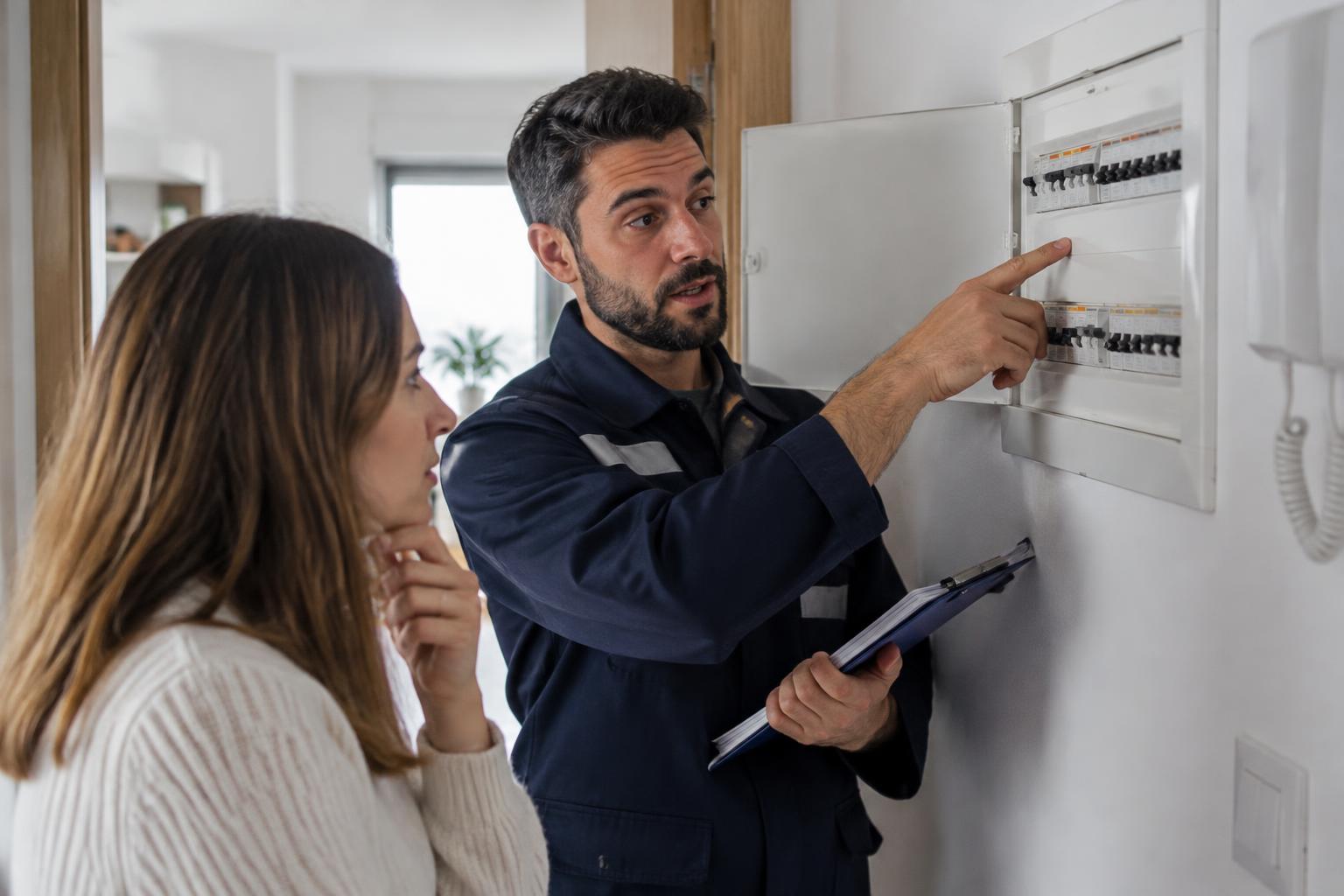
Electrical certificate: what information to request before changing the power rating
Before requesting a change in power rating, it is advisable to gather the correct documentation, distinguish between a professional inspection and your own check, and know when a technical certificate or approval from the residents’ association may be required. This will help you avoid incomplete requests, rework and unnecessary changes to the installation.
Electrical certificate: what information to request before changing the power rating
If you are the owner and are considering changing the contracted power rating, the first step is not to call the supplier blindly. The most useful thing is to gather specific information about the installation, the contract and the property’s actual use. The aim is simple: to know whether the power adjustment can be processed normally, whether any technical document is missing and whether there is any limitation arising from the installation itself or from common parts of the building.
In this private draft it is worth separating two ideas that are often confused: on the one hand, the information you should request before changing the power rating; on the other, the certificate or professional intervention that may, where applicable, be required. The prudent approach is never to replace a technical inspection with your own check, because a visual inspection by the owner does not prove the true condition of the installation or replace the assessment of a qualified professional.
### 1. What you should gather before starting the change
Before requesting the change, ask for or locate these basic details:
1. **Contract holder** and the exact way it appears on the bill.
2. **Full supply address** to avoid identification errors.
3. **Supply identification code** shown in the contract documentation or on the bill.
4. **Currently contracted power rating**, so you know the starting point for the request.
5. **Latest available bill**, because it usually contains the most useful technical details for the process.
6. **Description of how the property is used**: whether it is permanently occupied, rented out, used seasonally or whether the consumption pattern has changed.
7. **Details of the internal installation** you have to hand: recent refurbishment, consumer unit replacement, circuit expansion or previous faults.
If you do not have some of these documents, it does not mean you cannot go ahead, but it may cost you time answering later requests. The most common mistake is to request the change with incomplete details and later discover that a supply reference or a basic technical detail was missing.
### 2. When it is advisable to request a professional certificate
If the procedure requires proving that the installation is ready for the new power rating, the appropriate step is for the check to be carried out by an **authorised professional**. The important point here is that you should not try to sort it out with a home inspection: looking at sockets, checking circuit breakers or confirming that “everything works” is not the same as a technical validation.
Ask the professional, before hiring them, to confirm in writing:
1. **Exactly which document they will issue**.
2. **What property details they need** to inspect it.
3. **Whether their inspection will include an on-site visit**.
4. **Whether the documentation will be valid for the procedure you want to carry out**.
5. **Whether they detect any limitation in the internal installation** that would advise against increasing or reducing the power rating at this stage.
It is worth avoiding a common confusion: not every change in power rating automatically involves building work, but it may require the installation to be in suitable condition. That is why it is useful first to obtain a professional diagnosis and then decide whether it is worth proceeding.
> **BOE - Ley 49/1960, de 21 de julio, sobre propiedad horizontal**: “La realización de obras o el establecimiento de nuevos servicios comunes que tengan por finalidad la supresión de barreras arquitectónicas que dificulten el acceso o movilidad de personas con discapacidad [...] requerirá el voto favorable de la mayoría de los propietarios [...]”.
This quotation does not deal with the electrical certificate itself, but it does mark an important exception: if the supply change or technical work affects common parts of the building, it should not be decided as though it were entirely a private installation.
### 3. Technical information worth asking about before paying anything
Before commissioning the process, ask specific questions. This will help you compare quotes and avoid unnecessary interventions.
1. **Does the property need a technical check or is the existing documentation sufficient?**
2. **Are there signs that the current power rating does not match actual use?**
3. **Can the internal installation accommodate the change without additional work?**
4. **Are there common elements that could be affected?**
5. **What documentation will be delivered at the end and in what format?**
Practical tip: always keep a copy of the report, the service order receipt and any communication with the supplier or the technician. If an issue arises later, that record will save you from having to explain things repeatedly.
### 4. Common mistakes when requesting the power change
These are the most common errors to avoid:
- **Relying only on your own visual check.**
- **Requesting the change without reviewing the most recent bill.**
- **Not checking whether the professional is authorised to issue the required document.**
- **Ignoring whether there have been previous works on the installation that should be documented.**
- **Not distinguishing between the private dwelling and any possible common parts of the building.**
Another frequent mistake is thinking that any technical document will do for any procedure. That is not always the case. Before commissioning the work, ask for clarification on whether the certificate or report they prepare is the one that will actually be required.
### 5. What to do if the property forms part of a residents’ association
In a residents’ association, the practical rule is simple: if the change affects only your private installation, the process is usually more straightforward; if it extends to common parts, it is wise to check whether notice, authorisation or an agreement is needed.
The Ley de Propiedad Horizontal provides that agreements on common works or services may require different majorities depending on the case, and that there are situations involving common works linked to new energy supplies or efficiency improvements. That is why, if the work is not limited to your dwelling, do not assume that an individual process is enough.
Recommended steps:
1. Check whether the change affects only your consumer unit or also common areas.
2. Ask the technician whether access to common parts will be necessary.
3. If in doubt, consult the building administrator before starting any work.
4. If the community must be involved, keep a written record.
### Practical conclusion
Before changing the power rating, ask for information, not assumptions. The safest sequence is usually: gather the bill and supply details, confirm whether a professional technical certificate is needed, check whether the installation can accommodate the change and verify whether there is any impact on the community. That will give you a solid basis for deciding without improvisation.
If you would like to assess the property with more technical context before making supply or refurbishment decisions, you can use UBICASA’s indicative estimate at /valoracion-vivienda-madrid. If you would prefer us to review your case, you can write to us via /contacto.
UBICASA, Calle Montesa 29, Madrid. Real office Monday to Friday, 10:00-15:00 and 16:00-19:00. The online estimate is indicative, not an official valuation, and includes a range and PDF report, with an optional visit.
For individual guidance, please remember that this text is general and does not replace an analysis of your specific case, especially if the installation has had previous refurbishment, if there are doubts about common parts or if the technician indicates any specific limitation.