
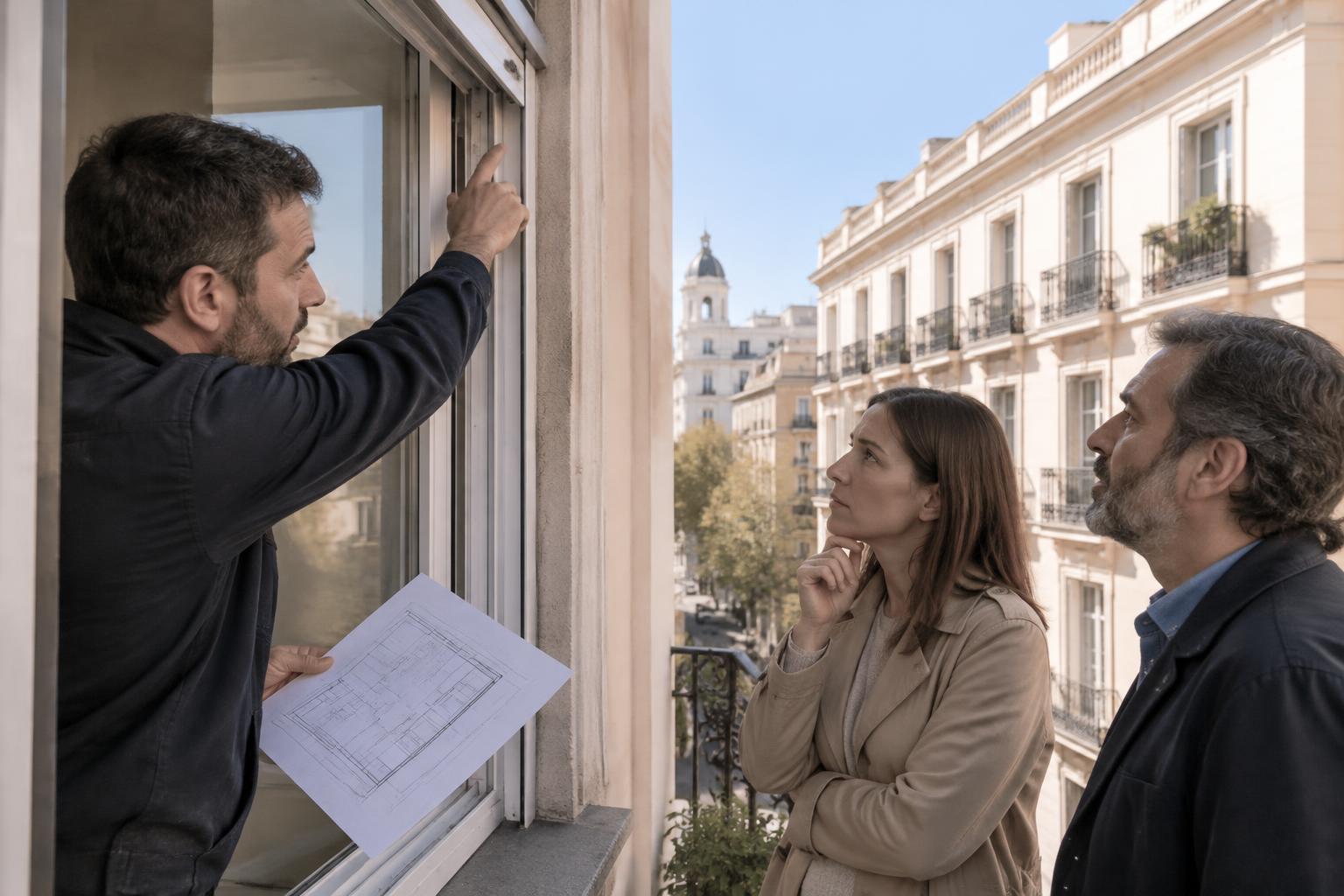
Changing the windows in a flat: what to check about the façade and ventilation
Before replacing the windows in your home in a block of flats, it is worth checking whether the work affects the building’s external appearance, how much leeway the owners’ association allows, and how to avoid problems with indoor ventilation. This guide focuses on the points you should check before starting the replacement, with reference to the LPH and the practical coordination with the community and any licence or technical authorisation the intervention may require. Check date: 2 November 2026.
Changing the windows in a flat may, at first glance, seem like an internal job. However, in a block of flats it can touch on two delicate areas: the façade and the ventilation of the home. If, in addition, the closure alters materials, colour, joinery or dimensions visible from the outside, the matter stops being a simple joinery replacement and requires a more careful review.
The key idea is this: you may act on private elements, but you may not undermine or alter the building’s external layout or condition, nor harm other owners. That is what Article 7.1 of the Horizontal Property Act reminds us, and it also requires that the works be reported in advance to whoever represents the community. The law also provides that there are mandatory conservation works and others which, because they affect common elements or the building envelope, may be subject to agreements or authorisations depending on the case.
1. Check whether the window affects the façade
The first question is not which window model you like, but whether the work changes the building’s external image. This includes, for example, the visible colour of the joinery, the type of profile, the layout, the opening system or replacing one window with another with a different finish.
If the building has a uniform aesthetic, the change may cause disagreement even though the work is carried out inside your home. It is not just a matter of taste: the façade is often considered a common element or, at the very least, a part whose alteration may require extra caution.
### What you should review before asking for a quote
1. **Title deed and bylaws**: check whether there is a rule on exterior joinery, enclosures or aesthetic uniformity.
2. **Internal rules**: these may set uniformity criteria or a procedure for visible works.
3. **Community minutes**: check whether a common window model has already been approved or whether there have been previous disputes.
4. **The actual condition of the façade**: if the building has gradually incorporated heterogeneous changes, that does not automatically mean total freedom, but it may help to understand the approach followed by the community.
### Common mistake
- Thinking that, because the window is inside your flat, you can change it without further ado. If the visible result alters the façade, extra caution is needed.
2. What the LPH says about private works and common elements
The Horizontal Property Act distinguishes between modifying private elements and altering common ones. Article 7.1 allows the owner to modify architectural elements, installations or services in their flat provided this does not affect the safety, structure, configuration or external condition of the building, nor prejudice the rights of another owner. Article 10.1 also regulates certain mandatory actions and works affecting conservation, accessibility and other interventions on the property, while Article 17 covers cases of community agreements for works and improvements affecting common elements or the envelope.
In practice, that means there are three different scenarios:
1. **Identical or very similar replacement**: usually the least problematic case, but it is still advisable to notify the community.
2. **Replacement with a visible change**: this may require community authorisation or, at the very least, prior validation by the managing agent or chairperson.
3. **An intervention that affects the envelope or changes openings**: here the work may move out of the purely private sphere and require a more intensive technical and community review.
The useful reference for confirming this general framework is Article 7.1 itself and Article 17.4 of the LPH, which include alterations to the structure or fabric of the building and modification of the envelope in certain cases. If the intervention forms part of a larger refurbishment, the community may have to rule on it in accordance with the legally required majorities.
3. Ventilation: do not close the job without checking how the home breathes
The second critical point is ventilation. Replacing windows with more airtight models can improve comfort, but it can also alter air renewal if the home previously relied on old infiltration. In a home with a kitchen, bathrooms or internal rooms, sealing too much without studying ventilation can lead to condensation, damp and a stuffy atmosphere.
Here it is not wise to promise savings or automatic improvements. The prudent course is to check that the new joinery does not leave the home worse ventilated than before and that it does not interfere with existing ventilation systems.
### Before commissioning the work, check:
1. **Whether the window includes air inlets or micro-ventilation systems** that compensate for the increased airtightness.
2. **Whether there are mandatory grilles, ducts or vents** in the affected room.
3. **Whether the change affects extractors, outlets or technical openings** near the window.
4. **Whether the refurbishment may create condensation** due to a lack of air renewal.
### Practical advice
- Ask the installer for a written description of how the ventilation will be after the work.
- If the property already suffers from condensation damp, do not assume the new window will solve the problem.
- If you are going to alter dimensions or openings, require a prior technical assessment.
4. Useful steps before starting the replacement
To avoid disputes, it is best to follow a simple, documented order.
1. **Review the community documentation**: bylaws, minutes and internal rules.
2. **Inform the chairperson or managing agent** before commissioning the work.
3. **Ask for a technical description of the window**: material, colour, opening, measurements and ventilation solution.
4. **Check whether the work affects the façade or envelope** and, if in doubt, request technical guidance.
5. **Keep a record of messages and quotes** in case disagreements arise later.
If you need an indicative commercial reference for the value of your home before or after a refurbishment, you can use UBICASA’s online valuation at /valoracion-vivienda-madrid. Please note that the estimate is indicative, includes a range and a PDF report and, if you wish, can be completed with an optional visit.
### Mistakes to avoid
- Changing the window without telling anyone when the façade is uniform.
- Choosing finishes that differ from the rest of the building for simple aesthetic preference.
- Closing the work without checking ventilation and condensation.
- Confusing verbal authorisation with a clear, documented agreement.
5. When to seek technical or legal support
Not every replacement requires the same level of caution. If the window is identical, the work is straightforward and the community already has a uniform criterion, the process is usually simpler. But if there are visible changes, doubts about the façade or disagreements between neighbours, it is better to seek professional review before starting.
That does not replace individual advice, but it does help you reduce the risk of conflict. If you would like to set out your specific case, you can write to /contacto or visit UBICASA’s physical office at Calle Montesa 29, Madrid, Monday to Friday from 10:00 to 15:00 and from 16:00 to 19:00.
In short: before changing the windows in a flat, check whether the work alters the façade, make sure how the ventilation will be left, and keep a record of the communication with the community. That simple sequence avoids most practical problems and helps you act within the LPH framework without improvising.