
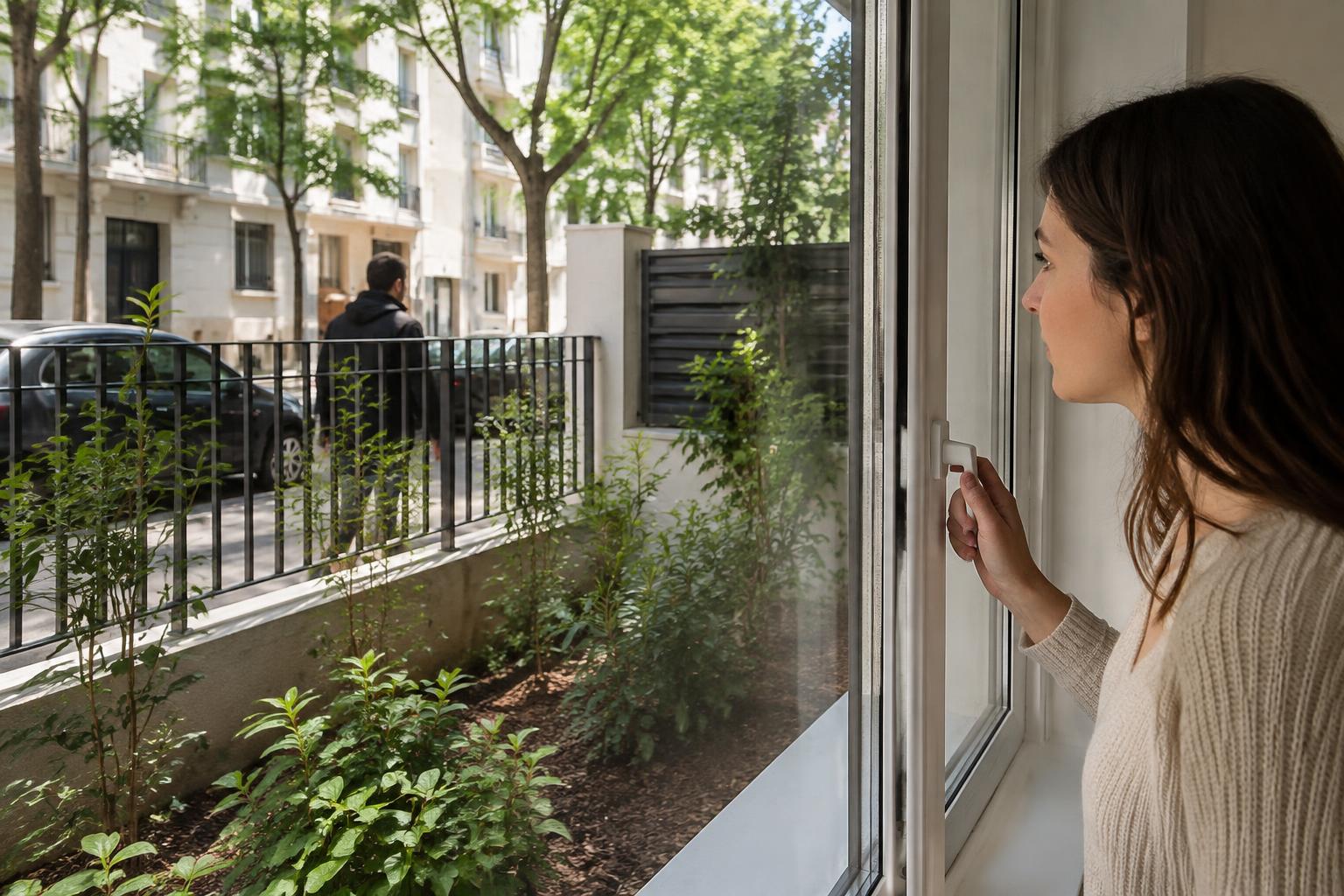
Ground-floor flat: what to check about privacy, access and ventilation
A practical guide to buying a ground-floor flat, focused on what can be checked at a glance: real privacy, everyday access, relationship with the street, ventilation and technical warning signs worth reviewing before deciding.
Ground-floor flat: what to check about privacy, access and ventilation
A ground-floor flat can be a very good fit for certain uses: people who want to avoid stairs, families with pushchairs, buyers who prioritise easy access, or those who value a more direct entrance. But precisely because of its position, it requires a different check from a flat on a higher floor. Before moving forward, it is worth separating three aspects that are often mixed together: real privacy, the quality of access and effective ventilation.
This guide focuses only on what is observable and verifiable during the viewing and in the basic documents for the purchase. It does not replace individual technical or legal advice, but it will help you identify useful signs before making a decision.
1. Privacy: do not just look at the height, observe the sightlines
In a ground-floor flat, the feeling of privacy does not depend only on being at ground level. It depends on how the home relates to the street, to courtyards, to entrances and to nearby windows.
During the viewing, check these points:
1. **Actual height of the sightline**: if the interior can be seen easily from the pavement, the entrance or the courtyard, you will probably need additional visual screening elements.
2. **Distance from the public road**: a short separation usually increases exposure to looks and noise, even if the layout is good.
3. **Opposite windows**: check whether there are buildings very close by, premises with activity or shared areas from which the interior can be seen.
4. **Ground-floor openings**: in some cases, the ground-floor flat has windows at street level; in others, it faces an interior courtyard or garden. These are not equivalent situations.
5. **Existing screening elements**: bars, slats, awnings, blinds, planters or plant-based screening can improve privacy, but they can also affect light and ventilation.
Practical tip: if you can, visit at different times. A lower floor can seem very discreet in mid-morning and much more exposed at dusk, when traffic increases or interior lights come on.
Common mistakes:
- Assuming that “ground floor” automatically means “more private”.
- Checking only the main façade and forgetting courtyards, communal corridors or secondary windows.
- Not checking where the interior is actually visible from.
2. Access: check the route, thresholds and everyday use
In a ground-floor flat, access is often one of the strengths, but it is not always as simple as it seems. Convenience does not depend solely on not using stairs; it also depends on how you enter, what obstacles there are and whether daily passage is safe and clean.
Check these elements:
1. **Route from the street or entrance hall**: observe whether the route is direct or whether there are turns, changes in level, narrow doors or shared areas that make entry with shopping, a pushchair or furniture more difficult.
2. **Entrance step and thresholds**: a small lip may seem irrelevant during the viewing, but be annoying every day.
3. **Doors and locks**: check whether the flat entrance door and the building door open easily and whether the locking system provides convenience without sacrificing security.
4. **Nearby communal areas**: lobbies, meter rooms, through-courtyards or storage areas can generate constant traffic next to the flat.
5. **Possible points of visual or physical intrusion**: if the lower floor faces a road with frequent footfall, check bars, locks and the strength of the façade openings.
It is also worth asking whether external access is for pedestrian use only, or whether it is shared with loading and unloading areas, maintenance access or routes used by the rest of the neighbours. That difference affects day-to-day comfort.
If you would like to request a professional assessment of the property you are considering, you can do so at /valoracion-vivienda-madrid. The online estimate is indicative, provides a range and PDF report, and can include an optional visit.
3. Ventilation: do not stop at “it has a window”, check whether the air actually circulates
Ventilation is one of the most important points in a ground-floor flat. In these homes, the location can make it easier for air to enter, or on the contrary, make it harder if the openings face very enclosed spaces, small courtyards or façades with little air renewal.
What should you check?
1. **Number and orientation of openings**: a single façade can limit cross-ventilation. If there is ventilation on two sides, circulation is usually easier.
2. **Interior courtyard or light well**: check whether the courtyard is wide or narrow, and whether it seems to allow real air renewal or only a minimal outlet.
3. **Position of windows and grilles**: not all solutions allow the air to be renewed with the same effectiveness.
4. **Persistent odours**: damp, cooking, drains or a stuffy atmosphere are usually signs of insufficient ventilation or poor extraction.
5. **Condensation and marks**: look for black stains in corners, frames, ceilings near openings and the lower part of walls; they may indicate moisture problems due to condensation.
Useful tip: open the windows if possible and wait a few minutes. Sometimes the air seems fine on arrival, but once you ventilate, outside noise, smells from the courtyard or a lack of renewal become more apparent.
If you detect signs of damp, do not stop at superficial cleaning. The stains may conceal a problem of insufficient ventilation, a thermal bridge or a leak, and it is worth distinguishing between them before buying.
4. What to ask for, what to note and when to stop the transaction
In a ground-floor flat purchase, the observable details should be backed up with basic documentation. The Comunidad de Madrid reminds buyers that the nota simple helps to identify ownership and charges, and that it is also important to check the financial situation of the property, including IBI and the homeowners’ association, because the property may be liable for certain outstanding amounts Comunidad de Madrid, compraventa de viviendas.
Before proceeding, review this list:
1. **Ask for the nota simple** to confirm ownership, charges and the general description.
2. **Request IBI and homeowners’ association receipts** if you want to check that payments are up to date.
3. **View the property at different times** if there is any doubt about privacy, noise or passing footfall.
4. **Note which windows face the street, courtyard or communal areas**.
5. **Check whether there are elements that improve or worsen ventilation**: very dense bars, enclosures, fixed insect screens, narrow courtyards or blocked openings.
Mistakes to avoid:
- Buying for the benefit of easy access without checking visual exposure.
- Thinking that a decorative renovation will solve a structural ventilation problem.
- Assuming that a ground floor with a courtyard is automatically more comfortable; the courtyard can improve daily life or become a source of poor light, noise and stale air.
If, after the viewing, you still have doubts about what you are seeing, or you want to compare the technical reading of the property before moving forward, you can write to /contacto. Initial guidance can help you decide whether it is worth continuing, asking for more documentation or ruling the property out.
In short: in a ground-floor flat, the key is not the floor label, but how you live with the outside. Privacy, access and ventilation should be checked together, because a home that is very easy to enter may be uncomfortable to live in if it does not solve those three points well.