
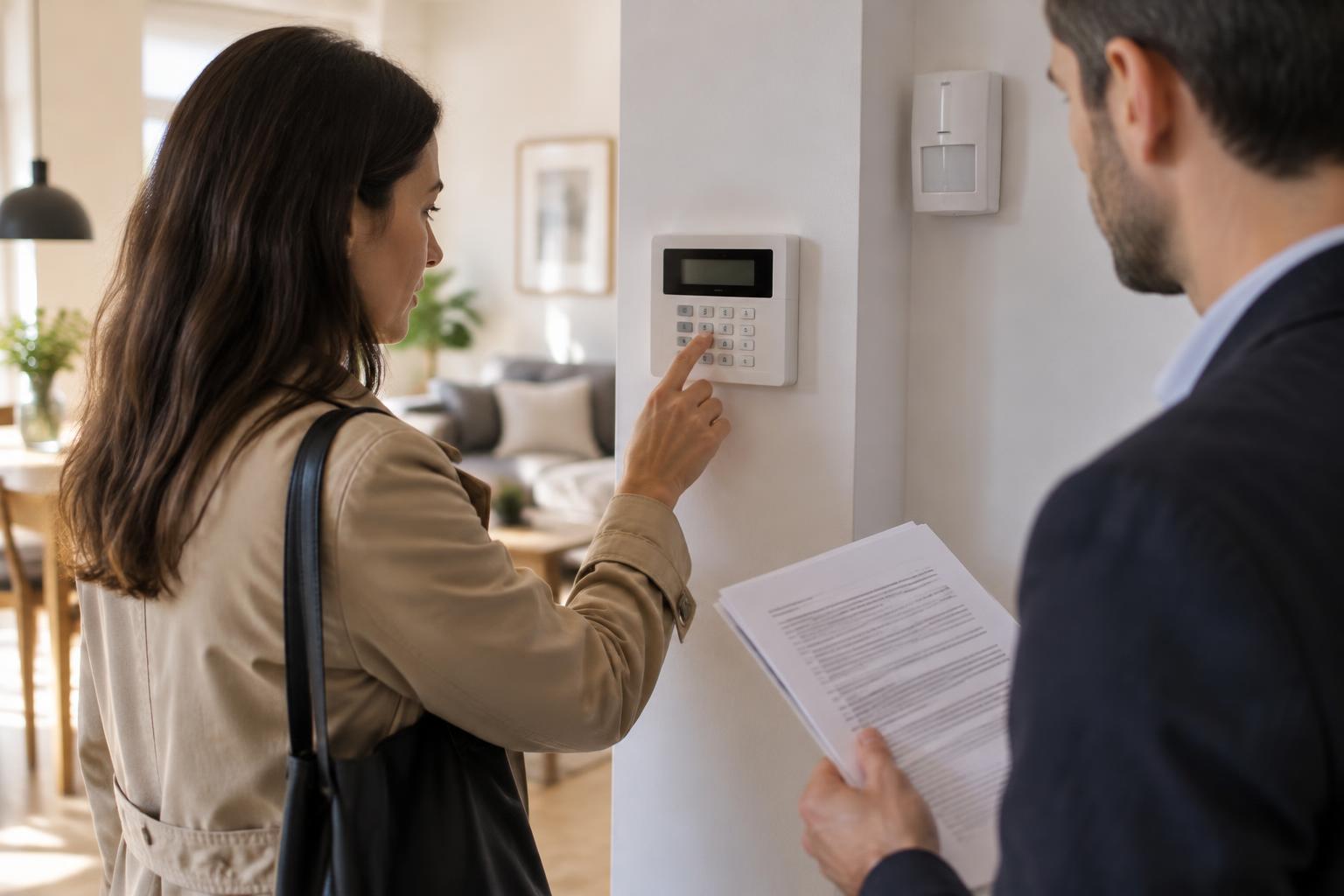
How to manage the alarm when selling a property: equipment ownership, codes and service contract
When selling a property with an alarm installed, it is worth checking who owns the equipment, how the keys or codes are handed over or removed, and what happens to the service contract, so as to avoid issues at completion and after the keys have been handed over.
Selling a property with an alarm system is not just a matter of leaving the house empty and signing the deed. If the property has an alarm installed, you need to sort out three matters at the same time: ownership of the equipment, access to the codes, and the continuity or cancellation of the service contract. If these points are not coordinated, problems may arise with the buyer, with the security company or with the homeowners’ association itself, as well as leaving access data uncontrolled.
The practical rule is simple: before handing over the property, everything that allows the system to be armed, disarmed or send alerts must be settled in writing and with proof of handover. This is especially important when the alarm includes keys, remotes, codes, connected sensors, indoor cameras or a mobile app linked to your phone number or email.
1) Check who is the actual owner of the alarm system
The first step is to identify whether the alarm is linked to you as the owner of the property, to a previous tenant, to an installation company or to a homeowners’ association. The person who uses the system does not always match the person listed as the service contract holder.
1. Review the alarm contract and locate the name of the holder.
2. Check whether the equipment is owned outright, on loan, on rental or under a service arrangement with a minimum term from the company.
3. Verify whether the system is connected to an alarm receiving centre and whether the registration depends on a personal account.
4. Confirm whether there are common areas or facilities in the building that form part of the system, because in that case community rules may apply.
In homes subject to horizontal property ownership, it is worth remembering that the homeowners’ association may regulate the use of common elements and that certain resolutions bind all owners. The Horizontal Property Act allows owners to approve rules and resolutions concerning common elements and general services, and also regulates representation and community decisions regarding the property []. If the alarm affects entrance halls, garages, storage rooms or a communal installation, it is not enough for you to decide on your own.
2) Remove or hand over the codes with a security-first approach
The second issue is the most delicate: there must be no active codes in the hands of third parties who no longer need access to the property. This includes keypad codes, app passwords, secondary users, physical keys, cards, remotes and phone numbers authorised to receive alerts.
The safest way to proceed is as follows:
1. Make an inventory of everything that opens or deactivates the alarm.
2. Change user codes before completion or at the moment the keys are handed over, if you still need to keep the property operational until then.
3. Delete old users from the app and from the control panel, not just change the password.
4. Hand over only the keys or remotes that the buyer has agreed to receive.
5. Keep written evidence of which items are handed over and which are removed.
If the buyer is keeping the system, the practical recommendation is that you do not retain access “just in case”. That residual access can lead to disputes if false alarms, technical problems or questions arise about images and notifications. If the property is sold without the alarm, or if the buyer does not want to continue with it, the sensible course is to delete all profiles and leave the system deactivated or removed, depending on the type of installation.
3) What to do with the alarm service contract
Here there is an important difference between selling the property and transferring the service. The sale of the property does not automatically mean that the alarm contract passes to the buyer, unless the parties agree this and the company accepts it under its terms.
You should therefore check three scenarios:
### A. The buyer wants to keep the service
In this case, the ideal approach is to arrange a transfer or a new registration in the buyer’s name. Before closing this option, check:
- whether the company allows a change of holder;
- whether there is any remaining minimum term;
- whether there are any fees, incidents or equipment to be returned;
- whether the buyer takes over the account from a specific date.
### B. You want to cancel the service before selling
You must request cancellation with the notice period and in the format required by your contract. If you do not, charges may continue even though you no longer live in the property. At this point it is sensible to coordinate the cancellation with the completion date so as not to leave the house unprotected too early or keep an unnecessary service after the sale.
### C. The system belongs to the property but the service does not
It may happen that the physical equipment stays in the house but the monitoring centre or app service is personal. In that case, you need to clearly separate the transfer of the hardware from the termination of the contract. That avoids the buyer assuming that the installation is “included” when in reality they only receive the device without activation.
4) Coordinate the alarm with the handover of keys and the final viewing
The alarm should be reviewed alongside the rest of the items handed over with the property: keys, remotes, cards, garage codes, storage-room keys and digital access. If you want to avoid disagreements, prepare a short handover list.
1. Note how many keys, remotes and cards are handed over.
2. State whether the alarm remains operational or has been cancelled.
3. Specify whether the buyer receives the manual, the app or the credentials.
4. Have the receipt signed alongside the handover of the keys.
5. If possible, photograph the condition of the installation and the devices.
In addition, if the property is in a homeowners’ association, remember that the transfer of ownership also requires care with the community paperwork. The Horizontal Property Act provides for the obligation to notify the change of ownership to the secretary, and also requires the transferor to provide a certificate regarding the state of debts with the community when the public deed is executed []. Although this does not deal specifically with alarms, it does affect the orderly completion of the sale.
5) Common mistakes when selling a property with an alarm
The most common errors are these:
- leaving an old user active in the app;
- forgetting to cancel the service and continuing to pay fees;
- handing over remotes without checking how many there are;
- failing to distinguish between ownership of the equipment and of the contract;
- verbally agreeing the continuation of the alarm without putting it in writing;
- not checking whether the alarm forms part of a communal service or a common element.
To avoid this, follow a simple rule: no access should remain live after the sale if you no longer have a legitimate interest in the property.
6) Practical recommendation to close the transaction without issues
If you want to do it properly, follow this order:
1. Review the alarm contract and ownership.
2. Decide whether the system is transferred, cancelled or handed over deactivated.
3. Change or remove codes and users before completion.
4. Prepare an inventory of remotes, cards and access details.
5. Keep written evidence in the key handover.
6. Confirm the next step with the security company: change of holder, cancellation or removal.
If you want an indicative estimate of your property’s value before selling, you can use the online service at /valoracion-vivienda-madrid. The valuation is indicative, not an official appraisal, and includes a range and PDF report with an optional visit. If you would rather discuss your specific case with an adviser, you can do so at /contacto.
In a well-prepared sale, the alarm should not be a source of conflict, but one more matter that is left resolved with order, security and documentary proof.