
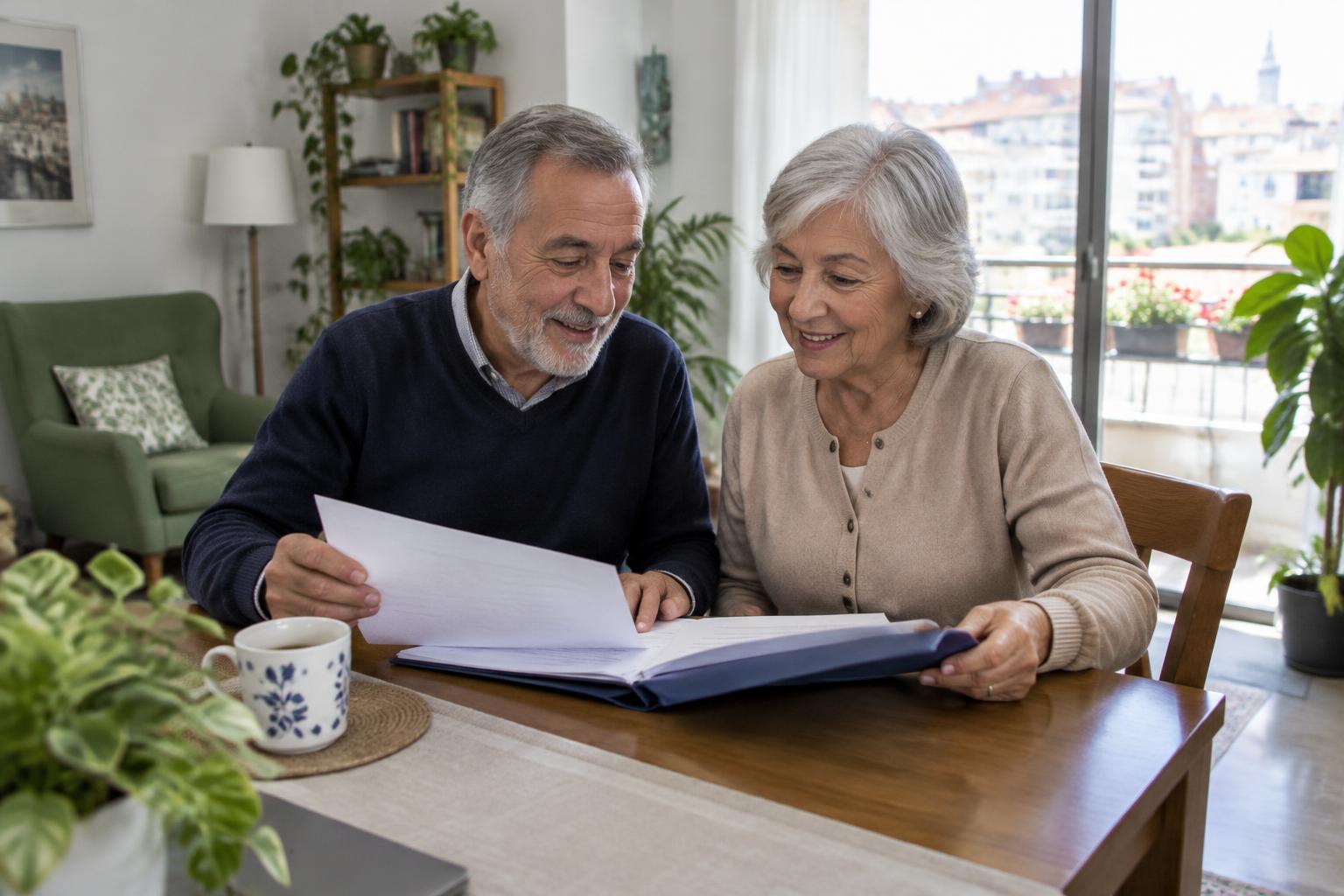
Selling your main home when over 65: IRPF exemption and precautions
Tax Agency provisions include an IRPF exemption for people over 65 when they transfer their main home. We explain when it applies, what is required for a main home, what happens with bare ownership, and what you should check if there are several co-owners.
What exemption is available for people over 65
If you are 65 or over and sell your main home, the capital gain you make may be exempt from IRPF. The Tax Agency expressly states this for the transfer of a main home by people over 65 in its specific Renta 2025 guide.
The practical advantage is significant: if the requirements are met, you do not have to reinvest the amount in another property in order to apply the exemption. That said, this affects IRPF and does not replace a review of any other taxes or costs associated with the sale.
When a property is considered a main home
For the exemption to apply, it is not enough for the house to be the one you want to sell: it must have fiscal status as a main home. The general rule requires continuous residence for at least three years. In addition, the property must have been occupied effectively and permanently within twelve months of purchase or completion of the works.
There are exceptions to this three-year period when circumstances arise that require a change of address. The Tax Agency itself mentions, among others, marriage, separation, a work-related move, obtaining a first job, a change of job or other similar justified situations. The exception is also accepted when the taxpayer dies or where circumstances prevent the property from being occupied.
Steps to check this
1. Check when you actually started living in the property.
2. See whether three full years have passed or whether a justifiable exception applies.
3. Check whether occupation took place within twelve months of acquisition or completion of the works.
4. Keep documents proving registration on the electoral roll, contracts, receipts or any evidence of effective residence.
For this exemption, the home may also be considered a main home if it had that status at any time in the two years before the transfer, according to the AEAT. If you moved out before selling, check the exact date on which it ceased to be your main residence. The IRPF exemption does not by itself exempt you from the municipal capital gains tax: that must be reviewed separately.
Bare ownership and other cases worth checking
The exemption also applies if you transfer the bare ownership and reserve the lifetime usufruct over the property. However, there is a very important caveat: when full ownership of a property is split between bare owner and usufructuary, neither of them can apply this exemption in those terms. That is why it is essential to analyse the exact title before signing.
Common mistakes
- Assuming that any sale of your own home is exempt.
- Confusing a main home with a second home or a rented property.
- Forgetting that the IRPF exemption does not automatically cover other taxes.
- Not checking whether the property is jointly owned or subject to separate usufruct.
Co-owners: the situation is analysed individually
If the property belongs to several owners, the tax position must be examined for each co-owner. They do not all necessarily have to meet the same requirements or receive the same treatment. For example, one owner may be entitled to the exemption and another may not, depending on age, habitual residence status or the way the ownership is held.
What you should do if there are several owners
1. Identify what percentage each owner is selling.
2. Check the age and situation of each co-owner.
3. Review whether all of them, or only some, meet the fiscal definition of main home.
4. If there is usufruct or bare ownership, do not assume the outcome: it is advisable to analyse it before completing the transaction.
Precautions before selling and what to ask for if you need help
The key is not to mix a favourable rule with a case that does not fit it exactly. This exemption is general, but its application depends on the specific facts. If your property was not occupied on time, if there were significant interruptions or if there are changes in ownership, it is worth reviewing the case carefully.
Practical recommendations
- Prepare the purchase, residence and ownership documentation.
- Check whether the property was sold as a main home or whether it ceased to be so some time ago.
- Confirm whether the transaction affects one or several co-owners.
- Ask for an indicative valuation if you need to decide on the asking price: you can request it through online property valuation in Madrid, with a range, PDF report and optional visit.
- If you would like to put your case to us, contact us at Contact.
At UBICASA, at Calle Montesa 29, Madrid, we are available Monday to Friday from 10:00 to 15:00 and from 16:00 to 19:00. This information is for guidance only and does not replace individual advice on your specific case.