
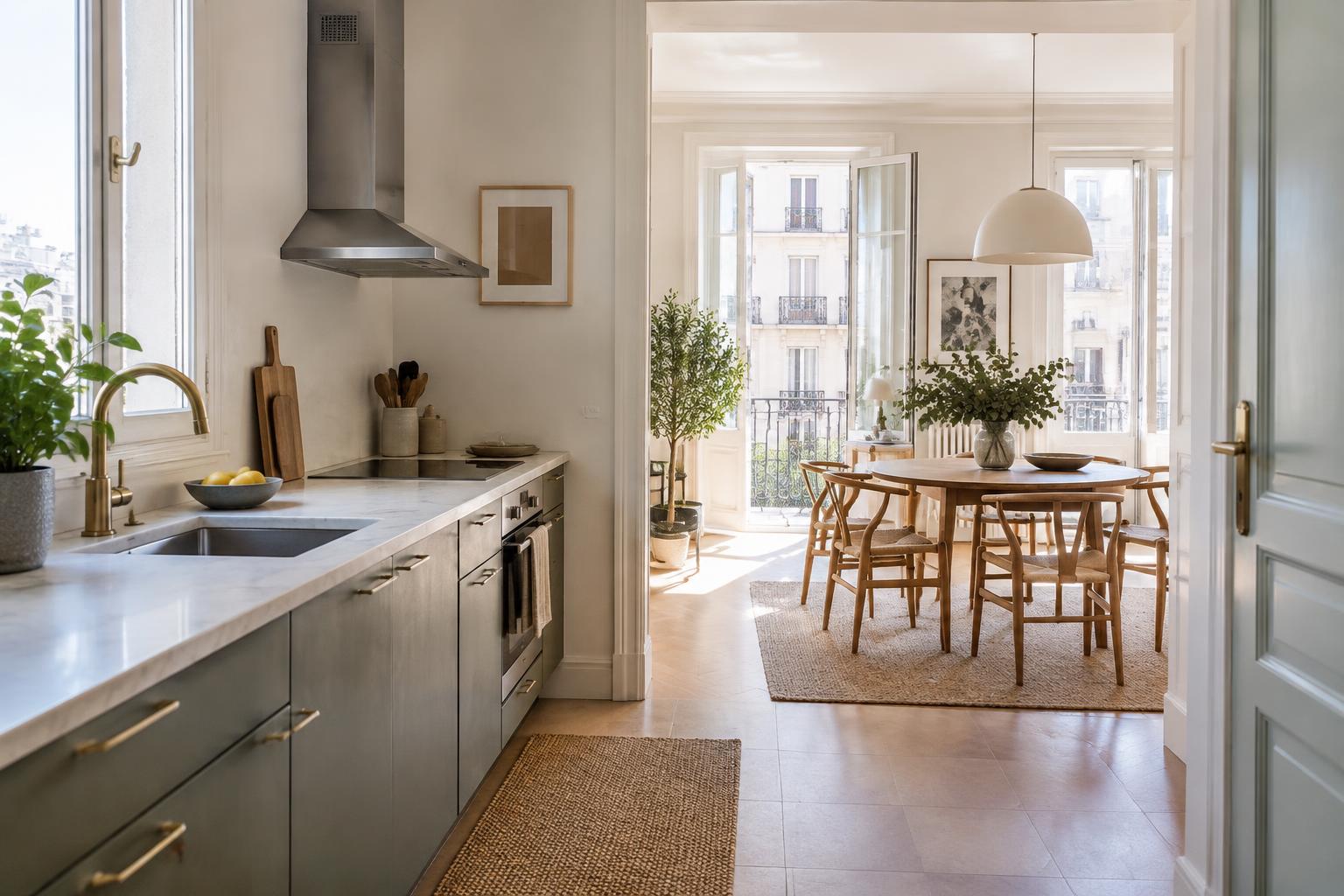
How to sell a flat in Imperial
How to sell an occupied home in Imperial: discreet viewings, controlled schedules and checking the real surroundings before setting the strategy.
Selling a flat in Imperial with the home occupied: where to start
Selling a flat in Imperial requires a different plan when the property is still occupied. In that case, the strategy is not limited to preparing photos and publishing the listing: you have to protect privacy, organise viewings and check precisely which surroundings will be shown to the buyer. That is especially important in a property sale in Imperial if you still live there or if the building has neighbours, routines and uses that should not be exposed more than necessary.
The key is not to “show more”, but to show better. The aim is to reduce inconvenience, avoid improvisation and support the flat valuation in Imperial with coherent comparables. An estate agency in Arganzuela can help you coordinate the whole process from the real office at Montesa 29, open Monday to Friday from 10:00 to 15:00 and from 16:00 to 19:00, with assistance for any area of Madrid.
If you need an initial guide, you can request an online estimate in free valuation of your property. That valuation is indicative, not an official appraisal, and includes a price range and PDF report; if needed, an optional visit can also be arranged.
How to prepare the home’s privacy before opening it to viewings
When the flat is occupied, preparation needs to be done with the comfort of the people living inside in mind. The buyer needs to see the property, but they do not need to see personal belongings, family schedules or domestic routines.
1. **Decide which rooms will be shown first**. If your property has especially sensitive areas, such as a study, children’s bedrooms or storage spaces, it is worth deciding the order before you begin.
2. **Remove paperwork and personal items**. Do not leave contracts, payslips, photos, medication or keys on display.
3. **Bring the home’s appearance into line**. A sense of order helps the buyer understand the space, light and layout more clearly.
4. **Give advance notice of each viewing**. In an occupied home, preparation time is part of the buying experience.
5. **Mark private-use areas**. If there are rooms or cupboards you do not want opened, say in advance how they will be shown.
Common mistakes at this stage:
- arranging viewings without any criteria;
- leaving rooms closed without explanation;
- showing too many personal items;
- accepting inconvenient times for the occupants;
- failing to coordinate everyone living there.
Practical tip: prepare a small internal sheet with three sections: “always show”, “show only if the buyer asks” and “do not show”. That classification saves stress and avoids on-the-spot decisions.
Viewing times: how to balance the sale with everyday life
In an occupied property, the viewing calendar matters just as much as the price. If your aim is to sell a flat in Imperial without disrupting daily routines too much, it is worth organising specific, repeatable slots.
Recommended steps:
1. **Group viewings into fixed time slots**. It is better to concentrate them than to open the door at any time.
2. **Avoid critical rest or mealtime hours**. Even if the buyer is interested, the home is still a home.
3. **Set a maximum duration for each internal viewing**. This prevents a single appointment from disrupting the whole afternoon.
4. **Create a clear sequence**: welcome, tour, questions and closing.
5. **Note observations from each viewing** so you do not repeat questions or show the same rooms unnecessarily.
A good schedule not only protects privacy: it also improves the perception of control and professionalism. In transactions with an occupied home, buyers usually value everything being well organised and information being given clearly.
Checking the real surroundings of Imperial before setting comparables
The local aspect is crucial. It is not enough to say “Imperial” in the abstract; you need to check which building it is, what immediate surroundings it has and which comparables genuinely fit it. The municipal map of the Imperial neighbourhood, Arganzuela district, helps to place the property or its surroundings, but it should not be used to assume exact proximity of each reference or to infer prices, times or profiles. The plan includes complete references such as **Paseo de Pontones**, **Calle de Juan Duque**, **Calle de San Alejandro** and **Calle de Moreno Nieto**, and these references help to locate the property more precisely when you compare it with other similar homes.
That translates into concrete actions:
1. **Check the exact location of your entrance**. The neighbourhood name alone is not enough; you need to confirm orientation, façade, floor and relation to nearby streets.
2. **Use map references to narrow the surroundings**. If your building is close to Paseo de Pontones or Calle de Juan Duque, that position may change how the property is presented; if it is not, it is not wise to mix in comparables from a different area.
3. **Separate the immediate surroundings from the wider neighbourhood**. A flat in Imperial Madrid is not valued the same just because it belongs to the neighbourhood if its micro-area differs.
4. **Review comparable listings with the same criteria**. Do not compare on instinct; compare by size, condition, building, floor level, layout and actual position.
5. **Do not attribute advantages to the map that you have not verified**. If something is not confirmed, do not use it as a selling point.
Hypothetical example: if you live in a building close to Calle de San Alejandro and are preparing a property sale in Imperial with the home occupied, you could show the more neutral rooms first, put away personal items and prepare the viewing for a time when the home is tidy and calm. Afterwards, the sales explanation should focus on what the buyer can see and verify: layout, condition, natural light, height and exact location within the neighbourhood, not assumptions about the surroundings.
What to check before listing and accepting viewings
Before publishing, it is worth carrying out a full check. The aim is not to overstate the home, but to present it accurately.
Useful checklist:
- condition of walls, floors and joinery;
- working shutters, sockets, taps and locks;
- appearance of entrances, communal areas and access to the building, if your building shares these with other neighbours;
- ventilation and real light during the hours when it will be viewed;
- documentation available to answer basic questions;
- consistency between what is advertised and what is shown;
- occupants’ privacy throughout the process.
If you want to review the paperwork before signing, this complementary guide may help you organise the process: /blog/documentos-vender-piso-madrid. And if you are still considering whether improvements are worthwhile, also see /blog/reformar-piso-antes-vender.
Important: the sale and purchase of homes involves legal and financial checks that should not be improvised. The Community of Madrid states that, before buying, it is important to verify the legal situation through an official title search, check the IBI and community charges, and ensure that the seller has the energy efficiency certificate for sale and purchase contracts entered into from 1 June 2013 onwards; it also notes that in certain cases the seller may be subject to municipal capital gains tax and income tax. It also sets out the consequences of earnest money deposits and of the private sale and purchase contract, as well as the information that the contract must include: details of the parties, the property, charges and financial obligations [Comunidad de Madrid].
How to coordinate viewings without losing control of the negotiation
Negotiation progresses better when viewings are well managed. If you show the flat too quickly, it may seem as though you want to close without properly explaining the property; if you are too rigid, you may put off a genuinely interested buyer.
Useful steps:
1. **Prepare a brief, honest account of the property**. What it has, what it does not have and what recent improvements have been made.
2. **Answer objective questions first**. Condition, layout, building and verifiable surroundings.
3. **Do not promise what you cannot prove**. If you have not checked something, do not present it as an advantage.
4. **Keep the information consistent**. Contradictory messages create mistrust.
5. **End each viewing with a concrete next step**. For example: a second viewing, document review or preparation of an offer.
If you need help comparing your property with others on the market, the general guide /blog/como-vender-piso-madrid-rapido can serve as a broader framework, although here the focus should remain on Imperial and the sale with an occupied home.
What role should an estate agency in Arganzuela play in this sale
An estate agency in Arganzuela does not just show flats; it also helps organise the sale when the home is still occupied. In a case like this, its value lies in reducing friction: coordinating schedules, filtering viewings, checking the consistency of the listing and turning the real surroundings into cautious selling points.
It can also help you to:
- define which comparables fit and which do not;
- avoid overexposing the home’s privacy;
- prepare a clear sales narrative;
- adjust the strategy if the first set of viewings does not work;
- gather frequently asked questions before negotiating.
If you want to move forward, you can do so from UBICASA’s real office at Montesa 29, Madrid, or leave your enquiry in contact UBICASA. And if you would like an initial guide to your property’s value, you can request it in free valuation of your property.
The difference between a smooth sale and an uncomfortable one usually lies in the details: privacy, schedules, checking the surroundings and choosing the right comparables. In Imperial, as in any other neighbourhood, selling with an occupied home is not about showing more, but about preparing each viewing and each decision better.