
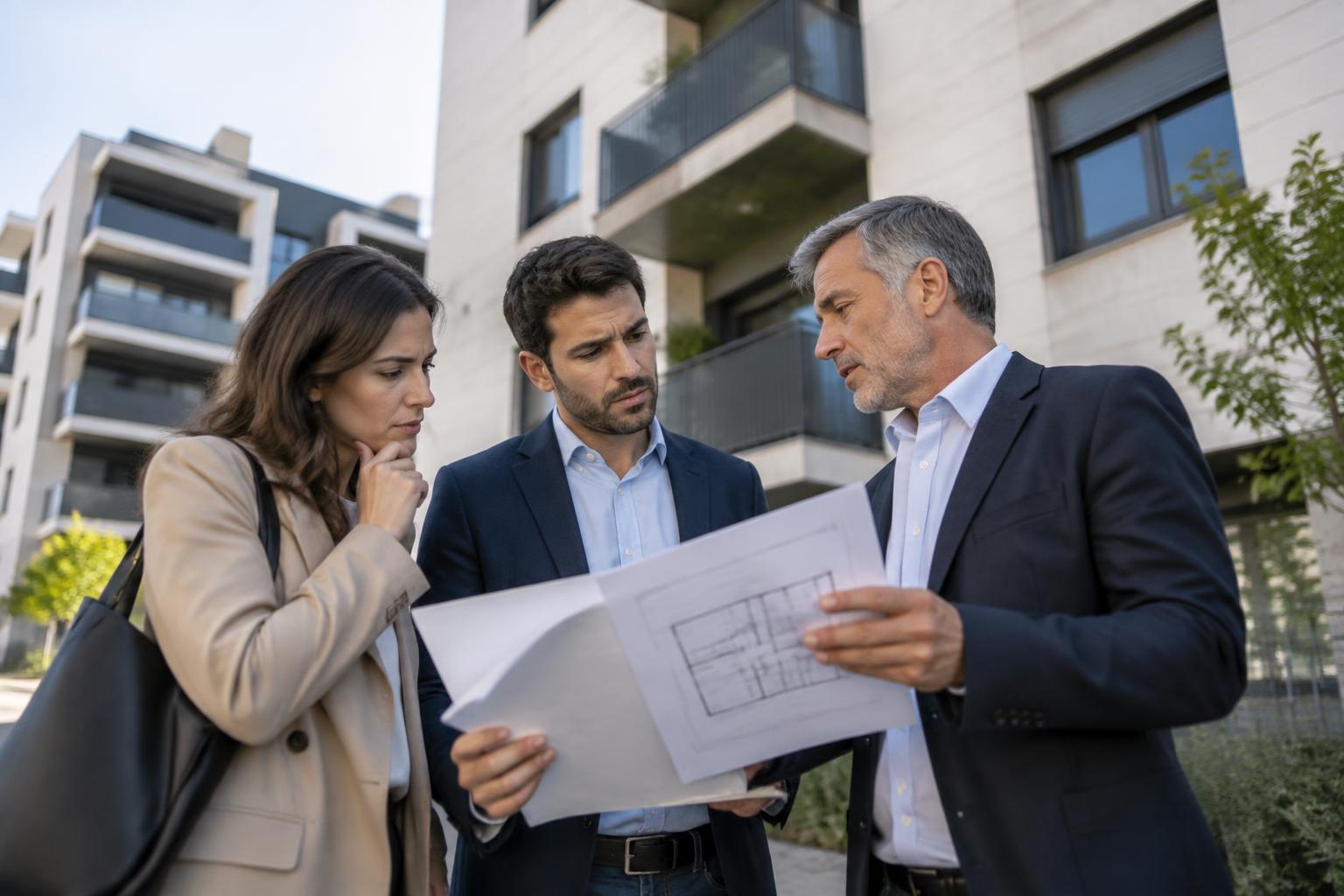
First Occupation Licence: what to ask before buying a home
Before buying a home, it is worth clarifying whether the building has a first occupation licence, which document proves it, whether it applies to the specific property and how to distinguish it from the habitation certificate. These questions help you check the planning documentation without confusing it with the other papers involved in the purchase and sale.
What you should clarify about the first occupation licence before buying
If you are thinking of buying a home, one of the most useful questions is not simply whether it “has the paperwork”, but what specific planning documentation exists for that building and how it fits with the property you are going to buy. The first occupation licence often comes up in conversations, adverts or sales packs, but you should not assume it always means the same thing or confuse it with other documents, such as the habitation certificate.
The practical idea is simple: before signing, you need to know whether the property can be correctly identified within the building, whether the documentary position matches what you are being sold, and whether the basic information about the property is in order. In a purchase and sale, the Community of Madrid also reminds buyers that it is important to check the legal status of the property through the land registry information note, verify the IBI and community charges, and request the usual documentation for the transaction. In the same vein, the regional public information on home purchases states that the land registry information note allows you to know charges, ownership and the description of the property, and that the seller must show the energy performance certificate in a property sale Comunidad de Madrid.
What to ask the seller or estate agent exactly
If you want to focus the conversation on the first occupation licence without getting lost in generalities, ask specific and ordered questions:
1. Does this building have a first occupation licence?
2. Does the documentation relate to the whole building or only to a specific part?
3. Does the property I am interested in match the description in the planning documentation?
4. Have there been any subsequent works, extensions or changes that may have altered what was initially approved?
5. Does the information about the property match the land registry information note, the deed and the physical reality of the home?
6. Are you showing me a licence or document that is actually something else, such as the habitation certificate?
These questions do not replace an individual review of the case, but they help you structure the purchase and sale. The aim is not to collect paperwork, but to understand whether the building and the property are described coherently.
### Signs that you should stop and look more closely
- They hand you a document without explaining which building or phase it applies to.
- The property has visible changes that do not appear in the basic documentation.
- They tell you it is “the same as the habitation certificate”, when in fact they are different documents.
- No one clarifies whether the property forms part of a development, a phase or a later renovation.
- The property information does not match the description you saw during the viewing.
How not to confuse the first occupation licence and the habitation certificate
One of the most common confusions is mixing up the first occupation licence with the habitation certificate. In practical terms, do not ask only whether it “has a habitation certificate”, as you may end up reviewing a document that does not answer the planning question you want to resolve.
The important thing is to separate three levels:
1. **Planning document for the building**: you want to know whether the construction or initial occupation is documented.
2. **Descriptive or administrative document for the property**: this may be useful for other purposes, but does not always answer the same question.
3. **Actual match between what is being sold and what exists**: layout, appurtenances, apparent surface area, common elements and any refurbishment.
If the transaction depends on financing, it is also worth asking the seller for a clear explanation of which document will be provided to the bank or the notary and what its scope is. Do not take “that is how it has always been done” at face value; ask them to tell you exactly what each document proves.
What to check in the paperwork before moving forward
In addition to asking about the first occupation licence, review the purchase and sale paperwork with the building in mind, not just the individual property.
1. **Land registry information note**: check who is listed as the owner and whether there are any charges or encumbrances.
2. **IBI and community fee receipts**: according to the information from the Community of Madrid, it is important to check that the property is up to date with both and to ask the seller for proof.
3. **Registry and physical description**: compare the layout, appurtenances, storage room or parking space, if any.
4. **Energy performance certificate**: in sales subject to the applicable rules, the owner must have it and hand it over to the buyer.
5. **Planning documentation for the building**: ask whether the first occupation licence exists, what scope it was granted for and whether there were later changes.
### Useful questions if the building is old or refurbished
- Has the original dwelling undergone major refurbishments?
- Have terraces been enclosed, rooms joined together or elements changed that could affect the description of the property?
- Did the building have different construction phases?
- Is there new-build completion, an extension or a later division that should be documented?
- Does the documentation you are being shown relate to the current state or to the building’s original condition?
These questions are especially important when the property is not in a recently built building or when the advert mentions improvements, extensions or reconfigurations.
Common mistakes when buying without asking these questions
One of the most common mistakes is assuming that “if it is for sale, it must be in order”. That is not always the case. Another frequent error is only looking at the kitchen, bathrooms or view and leaving until last the documentation that explains the building.
Nor should you assume that the habitation certificate replaces the first occupation licence, or ask for the wrong document. If you are buying a home, the sensible thing is to ask what each paper proves and how it relates to the specific property.
Another practical mistake is not cross-checking the planning documentation against the land registry information note and the physical reality of the property. If the information does not match, it is not the time to rush to close the transaction, but to clarify it.
What to do if something does not fit
If you spot any doubts, follow this order:
1. Ask for a copy of the documentation you are being shown.
2. Compare the details with the land registry information note and the description of the property.
3. Ask them to clarify whether the document applies to the building, a phase or a specific property.
4. Ask whether there have been any refurbishments, changes of use or later alterations.
5. If the answer remains unclear, do not move forward until you have a coherent explanation.
In complex transactions, document review must be carried out case by case. This guide points you towards what to ask, but it does not replace individual advice if the property has particular features.
If you would like us to review a property’s paperwork with you before buying, you can contact us at /contacto. And if you would like to guide the transaction with a preliminary estimate of the property, you can use the /valoracion-vivienda-madrid tool, which provides an indicative range, PDF report and optional visit.
In short: the questions you should not forget
Before buying a home, always ask about the building’s first occupation licence, its exact scope, whether any later modifications exist and how it differs from the habitation certificate. Then cross-check that information with the land registry information note, the IBI, the community fees and the actual description of the property. If everything matches, you will move forward with greater confidence; if it does not, you will have spotted an alert in time.