
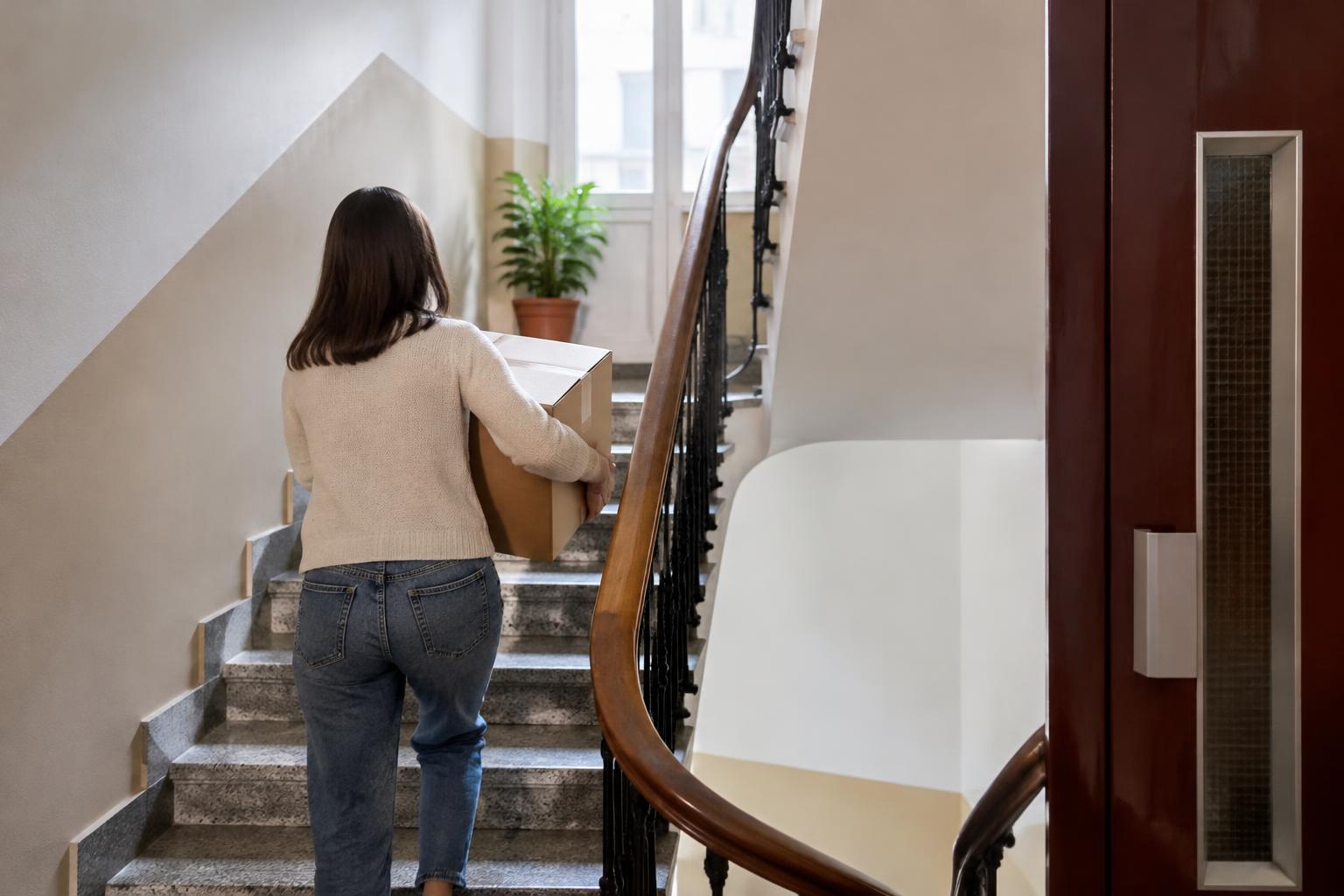
It is difficult to sell a flat without a lift: how to present it transparently
How to explain clearly the lack of a lift, access and the layout of a flat without exaggerating advantages or hiding limitations, in order to sell with useful and honest information.
Why it is worth mentioning the lift from the outset
Selling a flat without a lift does not require dressing it up or turning it into a bigger problem than it is. What it does require, above all, is presenting it well. When the buyer feels that the information is clear from the start, they can judge whether the property matches their real needs or not. That avoids unnecessary viewings, reduces misunderstandings and helps the conversation focus on what the property can actually offer: its layout, its light, its state of repair, the real floor level and the ease of using the spaces.
The absence of a lift should not be hidden in the advert, the preliminary call or the viewing. It is better to say so directly and neutrally. If you try to soften that fact with ambiguous wording, the buyer will discover it as soon as they arrive at the building and the first impression will be worse than if it had been explained naturally.
The idea is not to promise that the flat “makes up for it by itself” or to suggest it will appeal to any profile. The idea is to filter properly. A flat without a lift may interest those who prioritise other factors, but that should not be stated as a guarantee. What is useful is to show precisely what the property offers and what limitations it has.
What is worth highlighting in the flat description
The best way to present a flat without a lift is to organise the information in an honest, practical way. It is not enough to state “no lift” at the end of the advert. It is preferable to integrate it alongside other details that help to understand the experience of living there.
1. **State the exact floor and the number of flights of stairs** if this is relevant to the viewing.
2. **Explain the internal layout**: whether the flat makes good use of the square metres, whether it has a long corridor or well-proportioned rooms.
3. **Mention the orientation and natural light** only if they genuinely add value.
4. **Describe storage spaces**, balconies, terrace or areas that make day-to-day life easier.
5. **Point out the condition of the building** when this is an objective fact: entrance hall, staircase, general maintenance or whether the residents’ association has already looked at improvements.
It is not advisable to turn the absence of a lift into an exaggerated argument such as “perfect for those who exercise” or “ideal for investors” if you cannot support it with concrete data. Nor is it a good idea to downplay the effort of climbing stairs with phrases that come close to an implied promise. Transparency is more effective than trying to charm by force.
How to explain accessibility without promising solutions that do not exist
In a flat without a lift, accessibility is not limited to whether or not there is a machine. It also matters how the building is accessed, what the entrance hall is like, whether there are steps at the entrance, how wide the staircase is and whether the route is comfortable for people with reduced mobility, pushchairs or shopping.
The key is to describe reality, not to interpret it on behalf of the buyer. For example, you can explain that the property is on a certain floor, that access is via stairs and that there is no lift. That is enough for the interested party to decide whether they want to go ahead.
If the residents’ association is considering accessibility works, it is important to be very precise and not present them as a settled fact unless there is an adopted agreement. The Horizontal Property Act provides for compulsory measures to guarantee universal accessibility and, in certain cases, the installation of lifts or other devices, with the majority rules and limits established by the legislation: article 10.1.b sets out the works necessary to guarantee universal accessibility, and article 17.2 provides that even the installation of a lift can be approved with certain majorities of owners and quotas, with the specific rules on cost apportionment Ley 49/1960, sobre propiedad horizontal.
That does not mean you should promise the buyer that a lift will be installed. It means the opposite: if there is a project, an agreement or a real possibility, it must be explained cautiously and in writing, distinguishing what has been approved from what is still pending.
Layout: the detail that can balance the absence of a lift
When a flat does not have a lift, the layout becomes more important. A buyer may be more willing to climb stairs if they feel the property makes good use of every metre and that the interior compensates for the access. That is why it is worth explaining the layout clearly.
It can help a great deal to show:
1. **Whether the living room and bedrooms have a comfortable flow**.
2. **Whether there is little corridor or few wasted corners**.
3. **Whether the kitchen and bathroom are well arranged** for daily use.
4. **Whether the flat has cross ventilation, light or separated areas**.
5. **Whether the property allows flexible use** without major refurbishment.
The aim is not to embellish the layout, but to make it understandable. A small property may appear better organised than another that is larger but poorly arranged. That information is genuinely useful and helps the buyer assess the flat fairly.
Common mistakes when selling a flat without a lift
There are several mistakes that should be avoided from day one.
- **Hiding the absence of a lift** until the viewing.
- **Presenting the flat as if it had no functional impact**.
- **Talking about future works as though they had already been decided**.
- **Promising comfort for any buyer profile**.
- **Compensating for the drawback with empty phrases rather than concrete facts**.
It is also a mistake to omit elements that have a major influence on the decision, such as the number of stairs, the condition of the entrance hall or the internal layout. When that information is given late, the buyer often feels they have wasted time and the negotiation cools.
Practical steps to present it transparently
1. **Write the advert with one clear key fact**: flat without a lift, floor and access.
2. **Include honest photos** of the access, the stairs and the layout.
3. **Explain the interior of the property before the exterior**: light, spaces, real use.
4. **Do not promise improvements not approved** by the residents’ association.
5. **Prepare a brief, direct response for the viewing**: “it does not have a lift, but the property has this layout and these objective advantages”.
6. **If you would like prior guidance on how to fit that message into the sale, you can request a guideline online valuation of your property in Madrid, with a price range and PDF report and an optional visit**.
7. **If you need to review the sales presentation or coordinate the sale paperwork, you can contact UBICASA**.
The key is not to persuade at any cost. It is to present the flat as it is, in an orderly way and without promises you cannot later stand behind. In a sale like this, transparency does not detract: it better selects the right buyer and protects the transaction.
If you would like professional support, UBICASA welcomes you at Montesa 29, Madrid, Monday to Friday from 10:00 to 15:00 and from 16:00 to 19:00.