
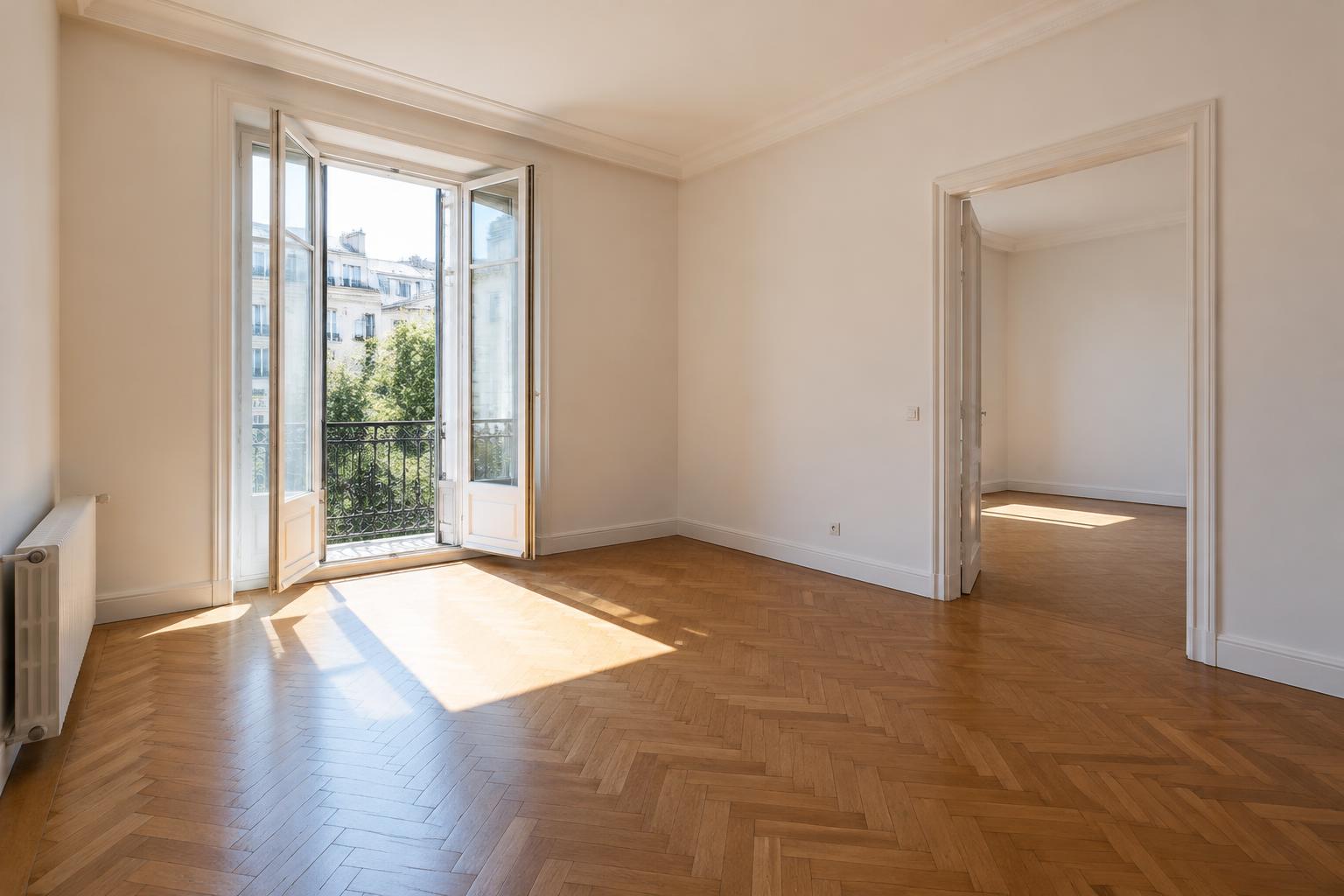
How to sell a flat in Gaztambide
Practical guide to selling a flat in Gaztambide, Chamberí: how to check access, building services and comparables without assuming common features.
# How to sell a flat in Gaztambide
Selling a flat in Gaztambide requires more than preparing photos and posting an advert. In a neighbourhood within Chamberí, the real value of a property depends a great deal on the specific building: accessibility, condition of the communal areas, services, orientation, layout and documentation. That is why, if you want to get the sale of a property in Gaztambide right, it is worth separating what belongs to the neighbourhood from what belongs to your building and your flat.
This guide is designed for owners who need a practical roadmap, with local checks and without assuming that all the buildings in Gaztambide are the same. UBICASA’s online estimate is indicative, not an official valuation; it is there to provide a range and a PDF report, with an optional visit if you need it: free valuation of your home.
1) Start with the building, not the neighbourhood
In Gaztambide there is a municipal map that helps to place the neighbourhood and its surroundings, but you should not use it to conclude automatically that a street, a facility or a specific building shares the same conditions. The official map identifies references such as **Mercado de Guzmán**, **Parroquia de Santa Rita**, **Jardines de Concejal Alejandro Muñoz Revenga** and **Colegio La Salle**; these mentions are there to help orientate you within the area, but they do not authorise you to assume exact proximity or common characteristics for all homes in the surroundings. Barrio 71 - Gaztambide, district Chamberí
If your building is in Gaztambide, the first task is not to set a price, but to check what is actually in front of you. This helps to sell a flat in Gaztambide with less risk of overvaluing it simply because it is associated with the area.
**Practical steps:**
1. Check the exact location of the building in the land registry, deed and simple note.
2. Check whether the building has accessible entrance, lift, storage room, concierge or other services, if any.
3. Separate the flat’s features from those of the building: not all properties in the neighbourhood share the same accessibility or the same state of repair.
4. Note visible issues: special levies, communal works, damp, outstanding communal elements or accessibility limitations.
**Common mistake:** assuming that “being in Gaztambide” makes up for any weakness in the building. That is not always the case; the correct presentation of the building’s services can be decisive.
2) Assess the building’s accessibility and services in detail
If your building has a lift, a wide entrance, step-free access, concierge services, well-kept communal areas or good maintenance, that can form part of the sales story. If it does not, it is also worth saying so transparently and explaining how it affects the buying decision. The key is not to beautify the building, but to describe it accurately.
The general guidance from the Community of Madrid on sales and purchases reminds us that the buyer can check the legal status of the property through a **simple note**, as well as verify whether IBI and community charges are up to date; it also notes that the energy certificate must be shown to potential buyers and handed to the final buyer in sales subject to that obligation. Property sales and purchases
For you, this translates into orderly preparation of the documentation and the sales messages.
**What is worth checking before showing the property:**
1. Whether the lift works normally and whether it has had any recent issues.
2. Whether access to the entrance is convenient for pushchairs, elderly people or moving furniture.
3. Whether there are architectural barriers and how they are described in the sales information.
4. Whether there are communal services that genuinely add value, rather than being mentioned out of habit.
5. Whether the building has works or special levies that a buyer will discover later.
**Useful tip:** write the building information on a separate sheet from the flat information. That way you avoid mixing building conditions with the property’s own features.
3) Select comparables with local judgement
The valuation of a flat in Gaztambide should be built on truly similar comparables, not on generic Chamberí references or adverts that only match the district. If you compare a flat with a lift and recent renovation to another without a lift or in another micro-area, the reading becomes distorted.
To place the surroundings, the municipal map mentions full references such as **Mercado de Guzmán**, **Parroquia del Santísimo** and **Servicio de Salud Mental de Moncloa**. These references can help you locate the area you are working in, but they do not mean that all nearby buildings have the same demand or the same condition. Use those references only as support to delimit the surroundings and then check the exact location of each comparable.
**Recommended method:**
1. Look for flats with similar structural features: floor area, height, lift, state of repair and layout.
2. Prioritise adverts and transactions as close as possible to your type of building, not just your neighbourhood.
3. If your building has special features, reduce the weight of comparables that are too different.
4. Check whether the comparables reflect a realistic presentation or whether they include improvements not visible in the photos.
**Frequent mistake:** taking a flat as a comparable simply because it appears in Chamberí. In a property sale in Gaztambide, that can lead to a price expectation that is hard to defend to buyers.
4) Documentation and checks before going to market
Property sales and purchases require a minimum of documentation discipline. The Community of Madrid guidance indicates that the **simple note** serves to check charges, ownership and other details of the building, and that it is important to verify IBI and community charges, because certain debts may affect the buyer. It also reminds us that, if the property is sold under the conditions set out in the regulation, the energy efficiency certificate must be available to potential buyers and handed to the final buyer. Property sales and purchases
**Checklist before going to market:**
1. Updated simple note.
2. Latest IBI bill or proof of payment, if applicable.
3. Energy efficiency certificate.
4. Proof of community charge status.
5. Information on approved or planned special levies.
6. Deed or documentation proving ownership.
**Practical action:** before setting the price, gather these documents and check whether there is any issue that should be explained from the outset. Transparency usually saves time in negotiations and reduces the risk of an offer collapsing because of unexpected paperwork.
5) How to show the flat in Gaztambide without generalising the building
It is not wise to sell “the neighbourhood” as if it were the property. What the interested buyer is really purchasing is your specific flat, within a specific building. If your building has real advantages, explain them calmly; if it has limitations, bring them up in advance with context.
**Hypothetical example:** imagine two homes in Gaztambide. One is in a building with a lift, easy entrance access and well-maintained communal areas; the other is in a building without a lift and with a narrow entrance hall. Although both are in the same neighbourhood, the way each one should be presented is different. The first can lean more on accessibility and day-to-day convenience. The second needs honest communication that highlights the layout, light, floor level or any other real strength, without exaggerating what it does not have.
**Good practice during viewings:**
1. Prepare a brief explanation of the building.
2. State what belongs to the community and what belongs to the flat.
3. Do not hide accessibility barriers.
4. If there is noise, works or incidents, be ready to answer clearly.
5. Have the basic documentation to hand to resolve serious questions.
6) What to do if the building matters more than the flat
Sometimes the buyer values the building more than the interior layout. If your building is not an advantage — for example, if several floors have to be climbed without a lift, if the entrance needs improvement or if the community has outstanding matters — the strategy needs to be different. It is not about hiding it, but about offsetting it with solid, well-structured arguments.
**How to act:**
1. Identify weak points before publishing.
2. Prepare a coherent explanation of why the flat is still interesting.
3. Use truly similar comparables so as not to create false expectations.
4. Work on a balanced description: neither alarmist nor complacent.
**Mistake to avoid:** correcting a building weakness with an improvised price without any comparative basis. That usually lengthens timescales and generates more unhelpful viewings.
7) Professional support and next steps
If you want to sell a flat in Gaztambide in an organised way, it is advisable to work with an estate agency in Chamberí that knows the neighbourhood in practice and can distinguish between surroundings, building and property. UBICASA handles sales from its real office at **Montesa 29, Madrid**, from Monday to Friday from **10:00 to 15:00 and 16:00 to 19:00**. You can request an indicative valuation at free valuation of your home or write via contact UBICASA. You can also consult the district page at /inmobiliaria-chamberi.
To expand on the general sales process, you can review the guide /blog/como-vender-piso-madrid-rapido and, if your case fits, these two complementary guides: /blog/quien-paga-derramas-vender-piso-antes-arras and /blog/como-documentar-lecturas-contadores-entregar-casa.
**In summary, if you are going to sell a home in Gaztambide:**
1. Check the building and its accessibility.
2. Use map references only to locate, not to assume features.
3. Prepare basic documentation and checks.
4. Select truly similar comparables.
5. Explain transparently what the building adds and what it does not.
With this approach, the sale stops depending on intuition and becomes based on verifiable facts, something especially important in a neighbourhood where each building can tell a different story.