
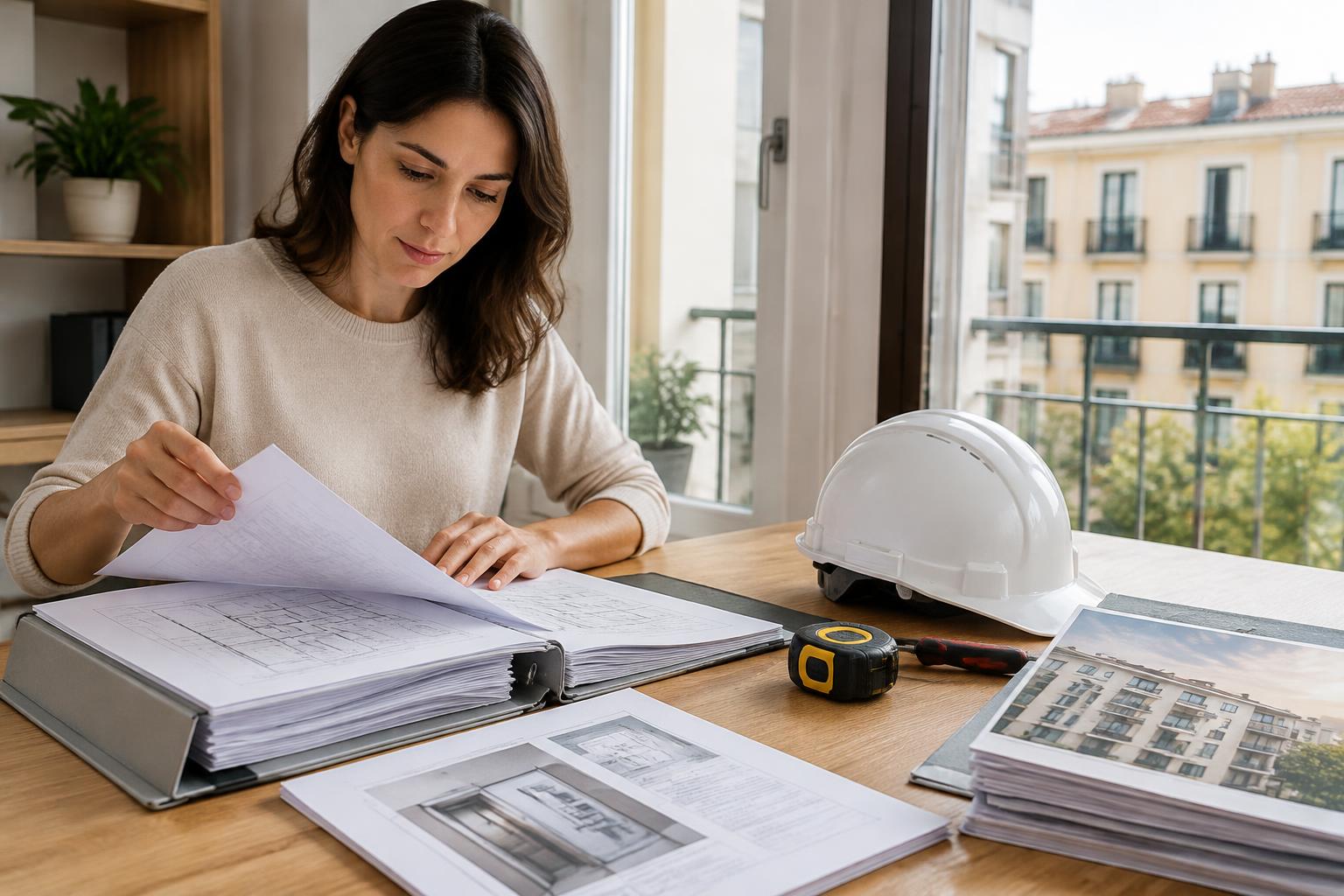
Building logbook: which maintenance documents are worth keeping
Which technical and building-work paperwork is worth keeping in the building logbook to stay organised, make repairs easier and prepare better for any sale or future work.
What is worth keeping in the building logbook
The building logbook is not just a folder full of old papers: for an owner, it is above all a way of preserving the property’s technical history. If you own a home in a jointly owned building, keeping the documentation well organised helps you understand what has been done, when it was done and what may affect future repairs, works or incidents.
The **Horizontal Property Act** assigns the administrator responsibility for safeguarding the community’s documentation and the secretary the preservation of certain relevant documents from meetings; in addition, the community must look after the conservation and upkeep of the property, and the owners’ meeting approves repair works on the building. You can see this in articles 19, 20 and 14 of the law, in the consolidated BOE text: Ley 49/1960, de propiedad horizontal.
In practical terms: if you want the building logbook to be useful, it is not enough to keep “whatever there is”. It is worth keeping the documents that make it possible to reconstruct the technical life of the building, especially those linked to maintenance, repairs, renovations and agreements affecting common or private elements.
Technical documents that are worth keeping
These are the documents that, for practical use, are worth gathering and keeping accessible:
1. **Works projects and technical reports**: especially if there were refurbishments, reinforcements, waterproofing, replacement of installations or interventions affecting the structure or common elements.
2. **Completion certificates and handover records**: these help prove that a job was finished and under what conditions.
3. **Inspection or diagnostic reports**: when the building has damp, cracks, facade problems, roof issues or installation faults, these reports help avoid starting from scratch each time.
4. **Manuals or documentation for common equipment**: lift, communal boilers, pumps, ventilation systems, automatic doors, pressure sets or similar.
5. **Warranties, contracts and policies related to works**: this includes installer warranties, maintenance contracts and insurance linked to specific interventions.
6. **Energy certificates or energy improvement documentation**, if efficiency measures were carried out or documents are kept that help explain installations and later renovations.
To the extent that these documents explain how the building is constructed and how it has been altered, they will be useful both for routine maintenance and for any future query about a fault, a levy or more extensive works.
Works and maintenance documents worth filing
This is the practical core of the file. The point is not to keep everything indiscriminately, but to preserve what really allows you to show what was done and how it was done.
### 1) Before the works
Keep:
- accepted quotations;
- comparisons, if there were any;
- owners’ meeting resolutions approving the work;
- communications to owners;
- licences or formalities where applicable;
- preliminary reports that justified the intervention.
### 2) During the works
Keep:
- relevant work reports;
- incidents reported by the site management or the company;
- changes to the initial quotation;
- emails or minutes in which changes were approved;
- photographs of the process, if they help to understand the state before and after.
### 3) After the works
Keep:
- final invoice;
- completion or handover certificate;
- warranty;
- maintenance manuals if they were provided;
- acceptance certificate, if there is one;
- documentation on periodic checks that remain pending.
If the work affects a private element, it is also useful to keep information proving what was carried out inside the dwelling and what was left outside the scope of the work. This avoids confusion when, years later, questions arise about leaks, installation changes or maintenance responsibilities.
How to organise it without overcomplicating things
Good organisation is worth more than a huge, untidy file. I suggest a simple system:
1. **Separate by sections**: community, structure, roof, facades, installations, private renovations and periodic maintenance.
2. **Add a cover sheet or index** with the date and a brief description of each intervention.
3. **Keep digital and paper versions** where possible. Digital makes searching easier; paper can be useful if a document was signed or stamped.
4. **Include a basic chronology** of relevant works and maintenance.
5. **State who keeps the original** if the documentation is held by the administrator, the president or a particular owner.
This is especially useful in buildings with several interventions over time, because it allows you to tell whether a current issue may be related to a previous repair or to an installation that has already been altered.
Common mistakes when keeping documentation
There are several very common mistakes that are worth avoiding:
- **Keeping only invoices and throwing away the rest**. An invoice says how much it cost; it does not always explain what was done.
- **Not keeping owners’ meeting resolutions**. Without them, it is later difficult to know whether a work was approved or simply proposed.
- **Mixing community documentation with dwelling documentation**. It is worth clearly distinguishing common papers from private ones.
- **Losing contact details for installers or maintenance providers**. Although it may seem secondary, after a breakdown it can save a lot of time.
- **Filing things without dates or order**. A loose document is worth less than one integrated into a chronology.
What to check if you are buying or selling and want to use this documentation
Although this article focuses on the technical file, this documentation is also useful in a sale and purchase. It does not replace the land registry note, the review of the community’s financial მდგომარეობe, or the legal checks on the property, but it does help you better understand the building and answer specific questions about works, maintenance and possible incidents.
If you need an indicative valuation to support a sale decision, you can use the online home valuation in Madrid service, which provides an estimated range, PDF report and optional visit. And if you would like to review your case with a professional, you can write to UBICASA. The office is at Calle Montesa 29, Madrid, from Monday to Friday from 10:00 to 15:00 and from 16:00 to 19:00.
Practical steps to start today
1. **Gather everything you have** at home, in the community and in old emails.
2. **Make a list of works and maintenance** in chronological order.
3. **Ask the administrator** for a copy of or location of the relevant community documents.
4. **Digitise the important items** and save copies with a clear name and date.
5. **Mark which documents are missing** so you can recover them later if they turn up.
With this system, the building logbook stops being a forgotten filing cabinet and becomes a useful tool for preserving documentary value, making future repairs easier and better understanding the true condition of the property. And that, in a community of owners, usually avoids a great deal of misunderstanding.